
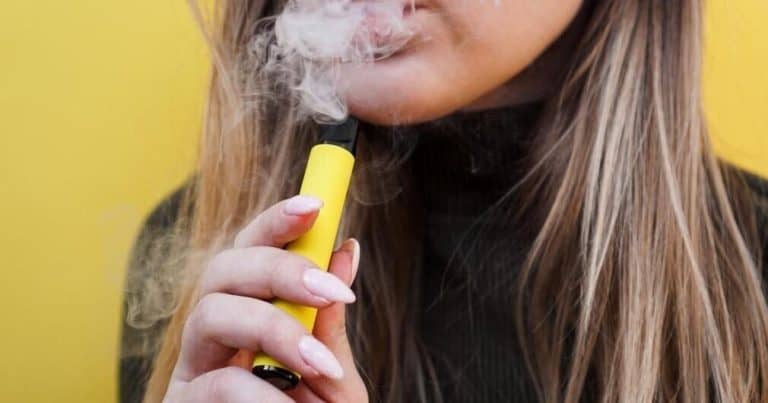

The use of electronic cigarettes, also known as vaping, in which nicotine is vaporized instead of burned, has increased in recent years, especially among young people.
YORKVILLE — Vaping in restaurants and other Yorkville workplaces will remain legal.
The Yorkville Village Board on Monday discussed joining Milwaukee, Madison and other Wisconsin communities in prohibiting electronic cigarettes in indoor workplaces.
However, members decided against such a move, saying they have received no complaints about vaping.
The American Lung Association says Union Grove, Caledonia and Waterford also have implemented vaping bans.
Sonja Peterson, the coordinator of the Kenosha Racine Walworth Tobacco-Free Coalition, said her organization is encouraging restrictions on the indoor use of electronic cigarettes to protect people from second-hand fumes.
Racine Public Health Officer Dottie-Kay Bowersox said the Racine Public Health Department has discussed the pros and cons of a vaping ban, but has not pursued the matter with city leaders.
People are also reading…
Wisconsin passed an indoor smoking ban in 2010, prohibiting the smoking of cigarettes and cigars in restaurants, taverns and other indoor workplaces statewide.
State lawmakers, however, have rejected calls to include vaping in the ban, which has left local communities to consider their own restrictions.
Molly Collins, advocacy director for the American Lung Association in Wisconsin, said that when people are allowed to vape in public places, the harmful habit becomes “normalized” for children.
“We think it is a problem,” she said. “The more we can do to keep these electronic cigarettes out of the hands of children, the better.”
What we know about the vaping illness outbreak in the US
WHO IS GETTING SICK?
The latest tally is 1,080 confirmed and probable cases in 48 states and one U.S. territory, including more than a dozen deaths. Health officials say 70% of the patients have been male. More than a third are younger than 21, with patients ranging in age from young teens to 75 years old.
FILE – In this Saturday, June 8, 2019 file photo, two women smoke cannabis vape pens at a party in Los Angeles. On Friday, Sept. 27, 2019, the Centers for Disease Control and Prevention said more than three-quarters of the 805 confirmed and probable illnesses from vaping involved THC, the ingredient that produces a high in marijuana. (AP Photo/Richard Vogel)
WHAT VAPING PRODUCTS ARE INVOLVED?
No single device, ingredient or additive has been identified. Most of the patients say they vaped products containing THC, the high-producing ingredient in marijuana. Others say they vaped both THC and nicotine. A smaller group report they vaped only products containing nicotine.
FILE – In this April 16, 2019, file photo, a researcher holds vape pens in a lab at Portland State University in in Portland, Ore. (AP Photo/Craig Mitchelldyer, File)
WHAT ARE THE SYMPTOMS?
Patients are coming into hospitals with cough, chest pain, shortness of breath, fatigue and vomiting. Imaging tests show lung injuries and doctors can’t find infections or other causes.
FILE – In this Friday, Jan. 18, 2019 file photo, a man exhales a puff of smoke from a vape pipe at a shop in Richmond, Va. (AP Photo/Steve Helber)
HOW SERIOUS ARE THESE ILLNESSES?
Many of the reports involve severe, life-threatening illnesses in previously healthy people. Many patients received oxygen. Some needed to be put on breathing machines. Antibiotics didn’t work, and it’s not clear yet whether steroid drugs helped.
“We don’t know how well people will recover from (the lung injuries) and the damage may be permanent,” Dr. Anne Schuchat of the Centers for Disease Control and Prevention said Thursday.
Vaping likely has dangers that could take years for scientists to even know about
WHAT ARE OFFICIALS DOING?
Even before the outbreak, schools were struggling to crack down on vaping because the devices are easy for students to hide. More than 1 in 4 high school students reported vaping in the past month in the most recent government survey. Health officials have warned for years that the popularity of flavored vape products among kids could result in lifelong tobacco use.
With concern about teen vaping already high, the health crisis spurred some states to stop the sale of flavored e-cigarettes or raise the minimum age for buying e-cigarettes to 21. Massachusetts suspended sales of all vape products for four months, a move that’s been challenged in court. The White House announced plans to ban flavored vape products.
Flavored e-cigarettes to be banned under new Trump administration plan
On Thursday, the Federal Trade Commission ordered Juul and five other vaping companies to hand over information about how they market e-cigarettes.
Meanwhile, criminal investigators from the Food and Drug Administration are focusing on the supply chain to find out what’s making people sick.
WHAT’S THE LATEST RESEARCH?
It’s not final proof, but experts who examined lung tissue from 17 patients say the damage looks like chemical burns, similar to what would be seen in people exposed to poisonous gases. Dr. Brandon Larsen of Mayo Clinic Arizona says he believes toxic fumes are causing at least some of the illnesses. The study was published Wednesday in the New England Journal of Medicine.
Incomplete lab testing by FDA continues to find THC and vitamin E acetate, a thickener, in some of the liquids tested, but Schuchat cautioned: “There may be a lot of different nasty things in e-cigarettes and vaping products and they may cause different harms in the lung.”
FILE – In this Tuesday, April 10, 2018 photo, a high school principal displays vaping devices that were confiscated from students at the school in Massachusetts. (AP Photo/Steven Senne)
HOW DO AMERICANS VIEW THE HEALTH DANGERS OF VAPING AND SMOKING?
Americans believe nicotine is a bigger public health threat than THC, according to a survey by researchers at NORC at the University of Chicago. Nearly all adults (90%) believe smoking cigarettes is harmful, and 81% believe vaping nicotine products is harmful.
Fewer see health dangers in marijuana with 65% saying vaping THC is harmful and 58 percent of adults saying smoking marijuana that contains THC is harmful. The nationally representative survey of more than 1,000 adults was conducted Sept. 19-24.
WHAT DO WE KNOW ABOUT E-CIGARETTE SAFETY?
Health experts generally consider e-cigarettes to be less harmful than traditional cigarettes because they don’t contain all the cancer-causing byproducts of burning tobacco. And some countries — including the United Kingdom — have fully embraced vaping as a public health tool to reduce the deadly toll of traditional tobacco.
U.S. health regulators have generally taken a more cautious approach. In part, that’s because there is virtually no long-term research on the health effects of the vapor produced when e-cigarettes heat a nicotine solution.
The FDA, which regulates nicotine-vaping products, has set a deadline of next May for all e-cigarette manufacturers to submit their products for review. Under FDA rules, only products that represent a net benefit to public health will be allowed to remain on the market.
FILE – In this June 17, 2019, file photo, a cashier displays a packet of tobacco-flavored Juul pods at a store in San Francisco. (AP Photo/Samantha Maldonado, File)
WHAT’S THE BEST ADVICE RIGHT NOW?
Health officials are urging people to stop vaping, particularly products that contain THC, and to get medical care if they have trouble breathing or chest pain after vaping.
Schuchat acknowledged a concern about black market products. She said states that license marijuana dispensaries are taking steps to make sure the products they regulate are safe, but she added: “With all the data I’ve been seeing, I don’t know what’s safe right now.”
FILE – This Aug. 28, 2019 file photo shows counterfeit packaging for popular vape brands in a display case of a store in downtown Los Angeles. (AP Photo/Michael R. Blood)
___
AP writers Mike Stobbe and Matthew Perrone contributed to this report.
Be the first to know
Get local news delivered to your inbox!


0 Comments