
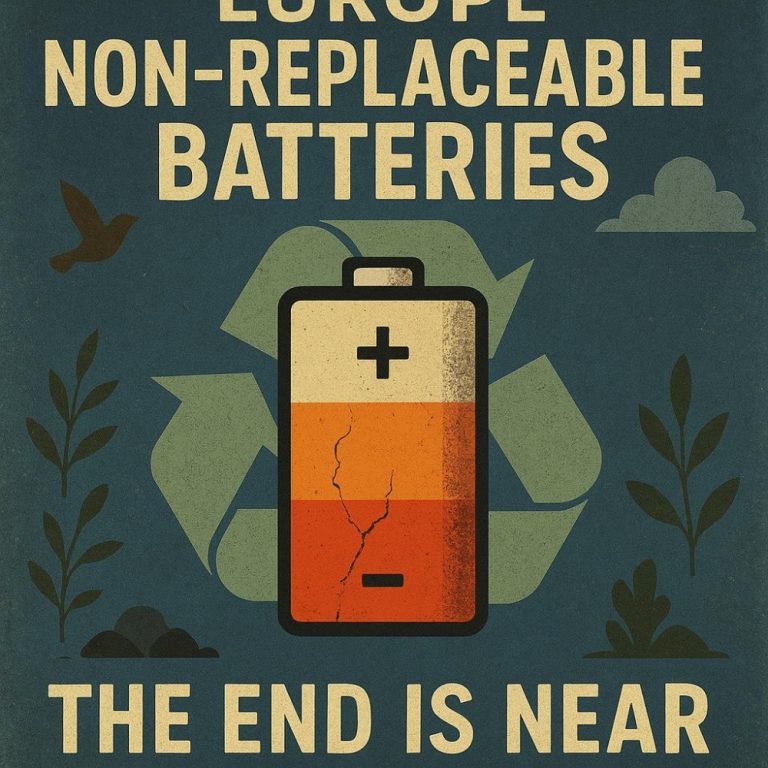

For years, replacing a phone or tablet battery has often meant booking a repair rather than simply swapping it out.That may start to change in Europe: from 2027, EU rules will require batteries in many products to be removable and replaceable by consumers, with some exceptions.
This does not mean every device will come with a spare battery or a simple snap-off cover. But it does set a new expectation: a worn battery should not automatically make an or else useful product difficult to keep using.
What changes in 2027
From 18 February 2027, the EU Battery Regulation requires portable batteries incorporated into products to be removable and replaceable by end users, unless an exception applies.
Removable does not necessarily mean tool-free. The battery must be accessible using commercially available tools. Where a specialised tool is needed, the rules generally require it to be supplied with the product free of charge.
The requirement applies to products placed on the EU market after the deadline; it does not require people to modify devices they already own. Manufacturers will also generally have to make replacement batteries available for at least five years after the last unit of a product model is placed on the market.
These rules are a significant step towards more repairable electronics, but they do not promise that every battery will be easy to swap at home. They do,however,give consumers a clearer route to replacing a worn battery rather than replacing the whole device.
Why the EU wants batteries to be replaceable
A phone or tablet battery can lose capacity while the rest of the device is still working well. when a replacement is difficult or expensive, owners may decide to buy a new device rather.Making batteries easier to replace could help keep products in use for longer.
The rules are also intended to support repair and recycling. Batteries contain valuable materials, and easier removal can help with collection and recycling when a product reaches the end of its life. A replaceable battery will not guarantee a cheap repair, but it can make one more practical.
The point is not to ban adhesive altogether. It is to avoid designs that make an ordinary battery replacement so difficult that a repairable device becomes harder to keep.
Which products are exempt?
There are exceptions. They include certain appliances designed to be regularly exposed to splashes, water streams or immersion and intended to be washed or rinsedand also some professional medical imaging, radiotherapy and in-vitro diagnostic equipment.
In some products whose main function is collecting and supplying data, a battery may also remain inaccessible to the user if a permanent connection is needed for safety or to protect data integrity. These are specific exemptions, not a general opt-out for manufacturers that prefer sealed designs.
Even when an exception applies, the battery must still be replaceable by an independent professional. The rules do not make every repair a do-it-yourself job, but they aim to ensure that a worn battery does not automatically spell the end of a device.


