

Table of Contents
Show Table of Contents
- Background: From Curiosity to Crackdown — How Nicaragua Got Here
- The Ban Unpacked: What’s Forbidden, Who’s Targeted, and Why
- Enforcement on the Ground: Customs, Police and the New Vape Reality
- Public Health vs. Personal Choice: The Arguments Behind the Move
- Regional Ripple Effects: Economic, Diplomatic and Consumer Consequences
- Conclusion, Wrapping Up, Finally…
From Curiosity to Crackdown — How Nicaragua Got Here
Electronic cigarettes first appeared in the early 2000s and quickly moved from niche curiosity to a global public‑health talking point, sparking debates about harm reduction versus new nicotine dependence. Nicaragua’s recent move to reaffirm a total vape ban is part of that larger story: a small country reacting to a worldwide technology that outpaced clear long‑term science.
Domestically, policymakers framed the decision as precautionary rather than experimental — a choice driven by concerns about youth uptake, uncertain long‑term health effects, and the difficulty of regulating rapidly evolving products. The result is a firm regulatory posture that prioritizes prevention over measured market access.
- Youth protection: Authorities cited rising global youth use as a central worry, prompting stricter rules to avoid similar trends locally.
- Health uncertainty: With long‑term effects still under study in many countries, regulators leaned on the precautionary principle.
- Enforcement practicality: Limited regulatory capacity and concerns about illicit imports made a full ban administratively appealing.
| Rising adolescent use | Advertising limits, flavor bans, or total prohibition |
| Unclear long‑term harms | Precautionary regulation or moratoriums |
| Enforcement constraints | Simpler rules like outright bans to reduce gray markets |
Put simply: when science is slow and products are fast, some governments choose the brakes.Nicaragua’s reaffirmation of a total vape ban fits that risk‑averse pattern and sets the stage for tougher enforcement and regional debate.
The Ban Unpacked: What’s Forbidden, Who’s Targeted, and Why
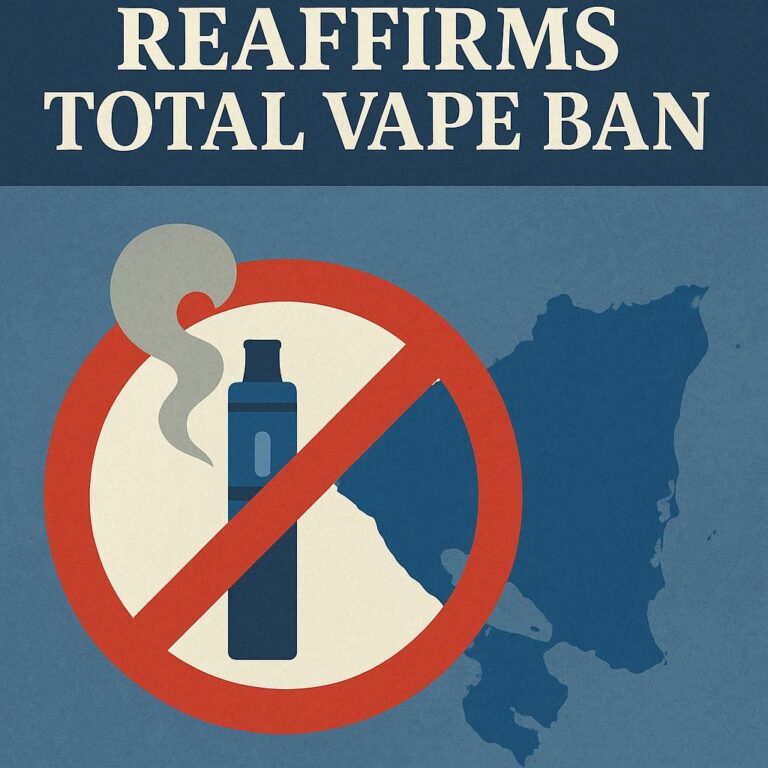
Nicaragua’s Health Ministry has reaffirmed Resolution No. 334-2021, “maintaining a total ban on vaping and e-cigarette sales,” which is the legal spine of the policy. This means the government has doubled down on removing commercial availability of these products rather than regulating them into a controlled market.
Practically speaking, the ban focuses on commercial activity — the sale and distribution of vaping products — rather than planting microphones in bathrooms. That scope most directly affects retailers, importers and distributors who handle e-cigarette products for profit.
- What’s forbidden: The ministry’s statement preserves a total ban on the sale of vaping and e-cigarette products, removing legal retail channels for those items.
- Who’s targeted: The regulation is aimed at commercial actors — shops, wholesalers and anyone engaged in selling or supplying vaping products.
- Why the ban remains: Officials cite youth protection, uncertain long‑term health outcomes, and the administrative appeal of a simple, enforceable rule over complex product-by-product regulation.
| Legal basis | Resolution No. 334-2021 was reaffirmed to keep a total ban on vaping and e-cigarette sales. |
| Commercial focus | The measure targets sale and distribution channels rather than purely private use. |
| Policy rationale | The decision leans on youth-protection concerns, scientific uncertainty, and enforcement practicality. |
In short: the reaffirmation is less about new technicalities and more about a clear political choice — keep vaping products out of commercial circulation. Expect the next sections to dig into how that choice looks on the ground and what it means for consumers and the region.
Enforcement on the Ground: Customs, Police and the New Vape Reality
The Health Ministry has reaffirmed Resolution No.334-2021, maintaining a total ban on vaping and e-cigarette sales. That legal reaffirmation puts customs officers and police squarely on the front line of enforcing Nicaragua’s vape ban.
Practically, enforcement means interception at points of entry and pressure on domestic sellers — a classic supply-chain chokehold. Expect increased scrutiny at ports, airports and parcel hubs as authorities try to stop products before they hit store shelves or doorsteps.
- Customs inspections: Target imports,packages and commercial shipments for seizure of contraband e-cigarette devices and e-liquids.
- Police operations: Focus on retail enforcement, market checks and follow-ups on reported sellers or distributors.
- Online and informal markets: Monitoring of classified ads, social media sales and bazaars where enforcement has historically been harder.
| Customs | Inspect and seize imported vaping devices and e-liquids at border crossings, ports and parcel centers. |
| National Police | Conduct raids, inspect retailers, and enforce penalties against commercial sale or distribution. |
| Health Ministry / Regulators | Issue guidance, formalize the ban (Resolution No. 334-2021) and coordinate interagency enforcement efforts. |
Officials emphasize prevention: stop the products at the border and shrink the market domestically,rather than chasing individual users. That strategy is administratively simpler, but it can push activity into informal channels where visibility and regulatory control are weaker.
Enforcement priorities also carry tradeoffs — stricter customs checks can slow legitimate shipments and spur creative workarounds by smugglers.Policymakers will need to balance aggressive interdiction with measures to limit a growing illicit market while keeping enforcement proportional and transparent.
Public Health vs. Personal Choice: The Arguments Behind the Move
At the center of Nicaragua’s vape ban is a classic public-policy tug‑of‑war: collective safety versus individual freedom. Both sides raise reasonable worries and plausible solutions, which is why the debate is never just about devices — it’s about values, evidence, and enforcement capacity.
The public‑health argument leans on prevention and precaution, especially around youth uptake and acute harms. Notable signals include the U.S. Surgeon General’s 2018 warning that youth vaping had reached epidemic proportions and the 2019 EVALI outbreak, which the CDC linked largely to vitamin E acetate in illicit THC vapes — facts that shaped global risk perceptions.
- youth protection: Preventing nicotine initiation among teens is a central rationale for strict rules and bans.
- Unknown long‑term harms: Regulators cite limited long‑term data on chronic respiratory and cardiovascular effects.
- Acute safety events: EVALI-era scares reinforced the case for strong,simple controls when supply chains are murky.
Advocates of personal choice and harm reduction counter that e‑cigarettes can be a less‑harmful pathway for adult smokers to quit combustible tobacco. Public Health England and some cessation experts have argued that switching completely to e‑cigarettes is likely less harmful than continuing to smoke, and many users report vaping helped them stop cigarettes.
- Smoking cessation: For some adult smokers, e‑cigarettes are promoted as a pragmatic tool to reduce cigarette harm.
- Consumer freedom: Bans are seen as heavy‑handed by users who prefer regulated access over prohibition.
- Black‑market risk: Prohibition can push supply into informal channels,raising safety concerns and enforcement costs.
| precaution to protect youth and avoid unknown long‑term harms. | Provide adult smokers with lower‑risk alternatives and regulated access. |
| Simpler enforcement via bans reduces visible retail supply. | Regulation aims to minimize illicit markets while preserving consumer choice. |
| Risk of pushing use underground if demand persists. | Risk of youth appeal and normalization of nicotine use if access is broad. |
Policy is frequently enough a balancing act: stricter measures can protect young people but may limit harm‑reduction options for adults, while looser rules risk greater youth exposure and product innovation that outpaces regulation. Nicaragua’s choice to reaffirm a total ban reflects a deliberate tilt toward youth protection and enforcement simplicity given local administrative realities.
Whether that tilt is the right long‑term answer depends on evolving evidence,enforcement results,and political appetite for nuanced regulation. Next: we look at how the ban is already rippling across the region — economically, diplomatically, and for everyday consumers.
Regional Ripple effects: Economic, Diplomatic and Consumer Consequences
Nicaragua’s reaffirmed vape ban reverberates beyond its borders, nudging trade flows, regional policy conversations, and the daily choices of consumers. Think of it as a pebble in a pond: not a tsunami, but enough ripples to make neighboring markets pay attention.
Economic effects: Local retailers, importers and small e‑commerce sellers that once carried devices and e‑liquids will see revenue and inventory disruptions. Customs and logistics sectors may face higher inspection workloads as authorities step up seizures and parcel screening to enforce Resolution No. 334‑2021.
Diplomatic and regulatory signaling: The ban sends a clear message to regional partners about Nicaragua’s precautionary stance on novel nicotine products, which can accelerate policy alignment or debate among neighbors. Governments in Central America and the Caribbean often watch each other for precedent‑setting moves, so Nicaragua’s choice could feed into broader regulatory discussions.
Consumer consequences: Adult smokers who used vaping for cessation may lose a legal,regulated option and could either revert to combustible tobacco or seek alternatives through informal channels.Informal and online markets tend to expand under prohibition, increasing the risk of unregulated, lower‑quality products reaching users.
- Supply shocks: Short‑term inventory glut for vendors and seized shipments at ports and parcel hubs.
- Market displacement: Demand may shift to informal sellers, cross‑border purchases, or DIY solutions.
- Policy contagion: Neighboring regulators may reference Nicaragua’s approach when drafting their own rules, for better or worse.
| Retail & trade | Lost legal sales, confiscated stock | Business closures or product pivots |
| Customs & enforcement | Increased inspections, higher workload | resource reallocation; potential for smarter targeting |
| Consumers | restricted legal access | Shift to informal markets or choice cessation methods |
| Regional policy | Policy signal to neighbors | Possible alignment or polarised debate |
Public‑health advocates will point to youth protection and simplified enforcement as wins, while industry and harm‑reduction proponents will warn of displacement into unregulated channels. The real test will be whether fewer legal sales translate into better youth outcomes without creating a riskier black market — a question only data and time can fully answer.
Next up: a concise wrap‑up that weighs the ban’s tradeoffs and what to watch for moving forward.
Conclusion, Wrapping Up, Finally…
By reaffirming a total vape ban,Nicaragua has turned a puff of policy into a firm line in the sand — or,more accurately,a no-cloud zone. The move carries immediate consequences for manufacturers, retailers and tourists, and raises practical questions about enforcement, public-health outcomes and the potential for a black market. Neighboring countries and global health observers will be watching closely to see whether the ban clears the air or simply pushes vapor into the shadows. In short: vapers may need to change plans, businesses to adjust strategies, and everyone else to follow the next chapter of a debate that is anything but extinguished.


0 Comments