
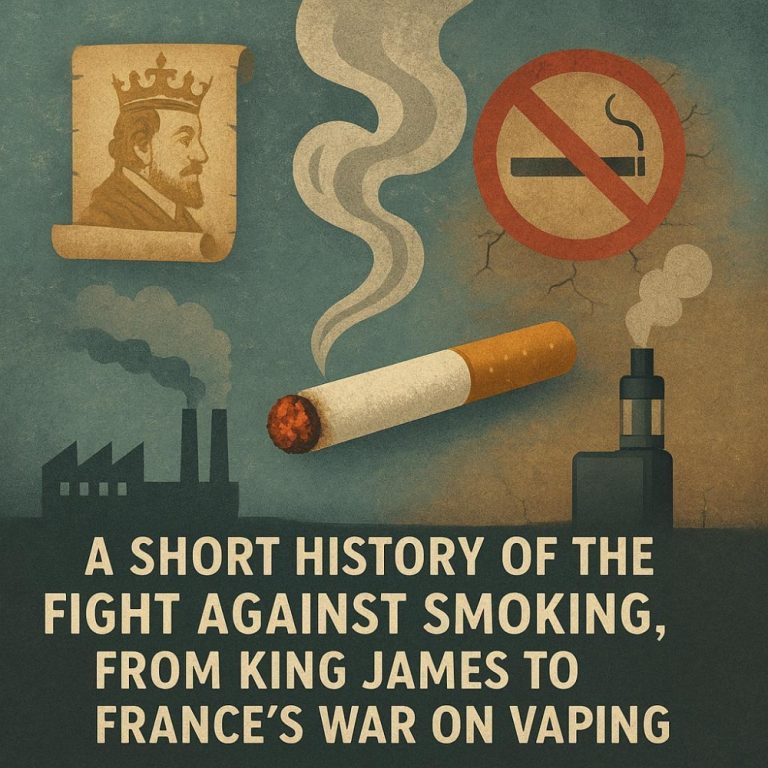

In 1604, King James I denounced tobacco as “a custom loathsome to the eye, hateful to the nose” in a pamphlet arguing against the fashionable new habit. Four centuries later, France is restricting disposable vapes. Pipes and smoke have given way to sleek devices and flavored vapor, but the central question is much the same: what should governments do when a popular way to consume nicotine raises concern?
The fight against smoking has never been a simple march from ignorance to enlightenment. Moral judgments, public-health evidence and arguments about personal freedom have all shaped the debate. From a king’s attack on tobacco to France’s rules on vaping, each era has found new habits to worry about-and new reasons to argue over them.
Table of Contents
- King James Takes on the “Lately Found” Smoke
- From Cigarette Taxes to Smoke-Free Streets
- France Turns Its Sights on Vaping
King James Takes on the “Lately Found” Smoke
By 1604, smoking tobacco in clay pipes had become fashionable in England. King James I was not a fan.In A Counterblaste to Tobacco, he called smoking “a custom loathsome to the eye, hateful to the nose, harmful to the brain, risky to the lungs.”
He objected to the habit on grounds of health and manners,likening its fumes to “the horrible Stigian smoke of the pit that is bottomless.” His language left little room for doubt about his opinion.
James also cast tobacco as a foreign custom that did not belong among English subjects. In his hands, a new pastime became a question of national identity and also personal conduct.
his opposition did not lead to a lasting ban. That same year, the Crown raised the import duty on tobacco, pairing disapproval with an effort to regulate a popular and profitable trade. Governments woudl return to that combination for centuries: condemning a habit while taxing or regulating it.
From Cigarette Taxes to Smoke-Free Streets
As cigarettes became a mass-market product, governments came to treat smoking as both a public-health problem and a source of tax revenue. Higher taxes could make cigarettes more expensive, but they also gave governments a elaborate role: discouraging a habit while collecting money from it.
the debate changed as evidence of smoking’s health risks mounted. In 1964, U.S.Surgeon General Luther Terry’s landmark report concluded that “cigarette smoking is a health hazard of sufficient importance in the United States to warrant appropriate remedial action.”
The report helped usher in new warnings and restrictions. The U.S. Cigarette labeling and Advertising Act of 1965 required health warnings on cigarette packages. A 1970 law barred cigarette advertising on television and radio, with the ban taking effect in 1971.
Before long, the question extended beyond smokers themselves: what about the people sharing the air? Governments began restricting smoking in workplaces, restaurants and other indoor public places.
the World Health Association’s Framework Convention on Tobacco Control,adopted in 2003 and in force from 2005,provided an international framework for tobacco-control measures. Smoke-free laws did not end smoking, but they changed where it was accepted-from a routine indoor habit to one increasingly confined to outdoor spaces.
France Turns its Sights on Vaping
France’s latest move targets a specific kind of e-cigarette,not vaping as a whole. A law promulgated in February 2025 bans the manufacture, sale, distribution and free distribution of single-use vaping devices, often called disposable “puffs.” Reusable e-cigarettes remain a separate category.
The ban reflects concerns raised by French lawmakers about young people’s access to nicotine products and the waste created by disposable devices. France had already restricted where people can vape: since 2016, vaping has been prohibited in places including schools, public transport and enclosed workplaces. Selling e-cigarettes to people under 18 is also banned.
The distinction matters. Vaping does not burn tobacco, but it can deliver nicotine. Public-health debates therefore weigh concerns about youth use alongside the possibility that some adults who smoke may use e-cigarettes to move away from cigarettes.
From James’s attack on tobacco to France’s restrictions on disposable vapes, governments have repeatedly tried to balance personal choice against potential harm to public health. The products change; the argument over where to draw the line carries on.


