
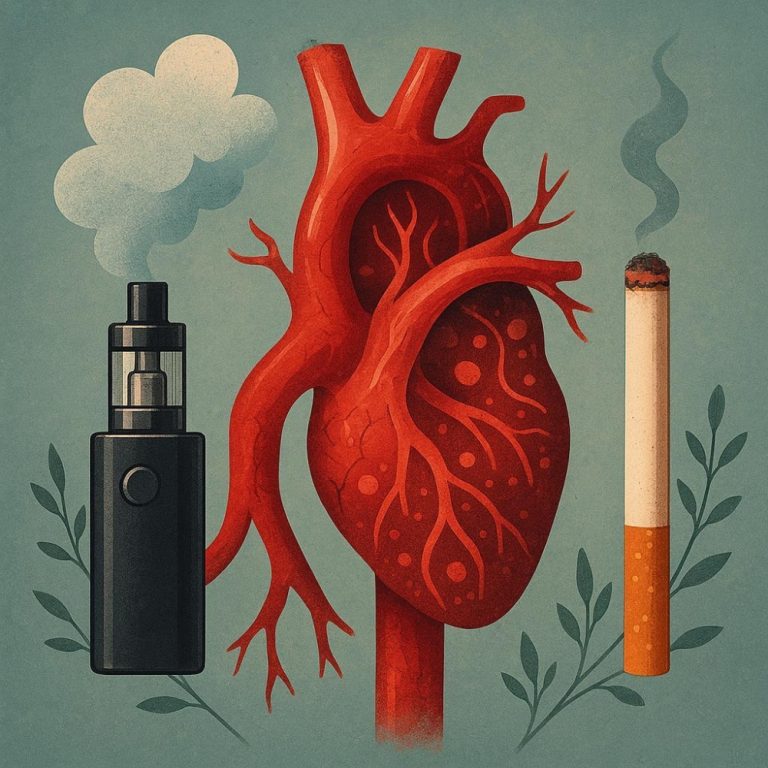

Vaping may look cleaner than smoking, but that doesn’t mean it leaves <a href=”https://vapemonitor.com/commentary-is-it-time-for-vaping-cessation-programmes-in-singapore/” target=”_blank” rel=”noopener noreferrer” title=”Commentary: Is It Time For … Cessation Programmes In Singapore?”>blood vessels untouched. In a study of just 17 people who vaped, researchers found signs of impaired vessel function that they described as comparable to those seen in smokers. It’s a striking finding, but a small study can’t settle the question of long-term risk.
So, is vaping as harmful to blood vessels as smoking? This study can’t say. It does, however, offer a reason not to assume that e-cigarettes are harmless simply becuase they produce no cigarette smoke.
Table of Contents
What the Study Found
researchers found signs of impaired blood-vessel function among 17 people who vaped, with changes they described as comparable to those seen in smokers. Healthy blood vessels need to widen and narrow normally to help direct blood thru the body.
That comparison applies to the measurements in this study. It doesn’t show that vaping and smoking carry the same lifetime risks. With only 17 participants, the findings are an early warning signal, not a verdict-and they can’t tell us how common the effect is or predict one person’s risk of heart disease.
Vaping and Smoking Are Different
Cigarettes burn tobacco; e-cigarettes heat a liquid to produce an aerosol. Vaping avoids many of the toxic products created by burning tobacco, but the aerosol isn’t just water vapor. It can contain nicotine, fine particles, metalsand other chemicals.
Nicotine can temporarily raise heart rate and blood pressure and narrow blood vessels. That helps explain why vaping may affect circulation even without cigarette smoke. the two products expose the body to different substances, and the long-term cardiovascular risks of vaping are still less well understood.
What We Still Don’t Know
A study this small can’t show whether the finding holds across people of different ages and health backgroundsor among those who vape regularly over time. Larger studies are needed. Researchers also need to account for factors such as past or current smoking, nicotine useand existing cardiovascular risks when assessing the effects of vaping.
And a change in blood-vessel function is not the same as proof that vaping causes heart attacks or strokes. Long-term studies tracking those outcomes will be needed to learn whether early signs of vascular effects translate into disease.
For now, the sensible conclusion is a cautious one: vaping is not the same as smoking, but this small study gives no reason to assume it is indeed harmless to blood vessels.


