
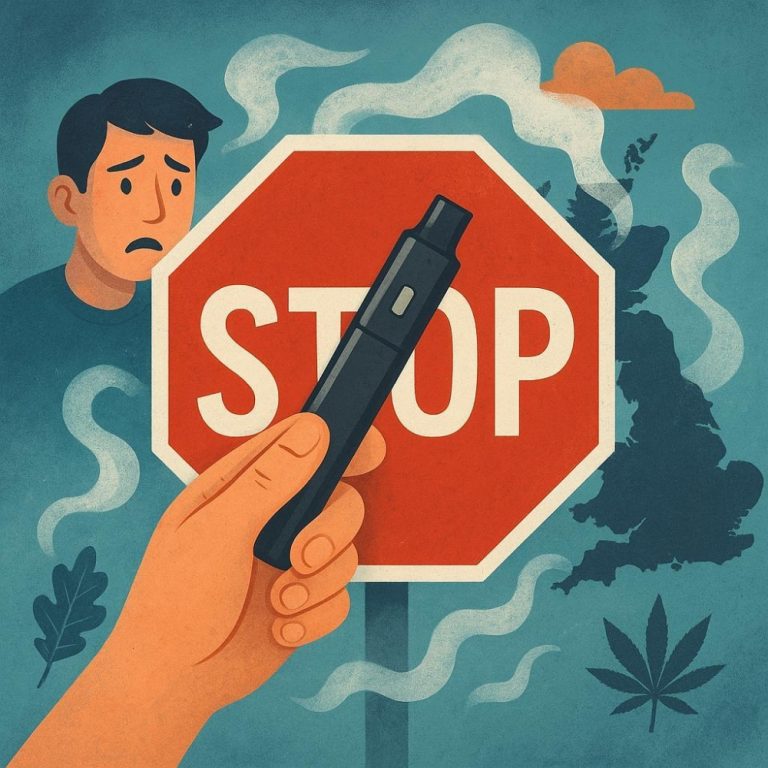

England’s Swap to Stop scheme offers people who smoke a free vape starter kit through local stop-smoking services, alongside support to quit. The offer is simple; deciding to use it may not be. For some smokers, vaping sounds less like a way to move on from cigarettes and more like a new health worry.
That hesitation matters. If warnings about vaping drown out clear advice on how its risks compare with smoking, the scheme may struggle to reach the people it is meant to help. The challenge is to answer people’s questions without suggesting that vaping is either harmless or just as harmful as smoking.
table of Contents
- A free vape scheme meets a wall of worry
- When “less harmful than smoking” gets lost in the fog
- Trust may be the missing ingredient in Swap to Stop
A free vape scheme meets a wall of worry
Announced in England in 2023, Swap to Stop was designed to remove one practical barrier to quitting: the cost of trying a vape. The scheme set out to offer up to one million people who smoke a free starter kit, along with stop-smoking support. But a free device can’t answer every question that might make someone wary.
Some concerns are well-founded. Vapes can contain addictive nicotineand vaping is not risk-free. Health guidance also advises people who don’t smoke not to start. Without the context that vaping is less harmful than smoking, though, “not harmless” can easily sound like “just as dangerous”.
The NHS says vaping is less harmful than smoking, while noting that its long-term risks are not yet fully known. For adults who smoke, switching entirely may reduce exposure to the harmful substances in cigarette smoke. Using a vape while continuing to smoke is not the same as stopping smoking.
The offer also has limits. Kits are provided through local stop-smoking services as part of a supported quit attempt; they are not a global free-vape giveaway. People considering one need straightforward advice on how to use it,what to expect from nicotine and where to turn if the device doesn’t suit them.
How the scheme is explained matters as much as access to a kit.Calling vaping “safe” would overstate the case. But listing risks without explaining how they compare with smoking can leave people with the wrong impression. Both points need to be clear.
When “less harmful than smoking” gets lost in the fog
The phrase “less harmful than smoking” can get lost between two othre messages: vaping isn’t risk-freeand its long-term effects are still being studied. Both are true,but neither means vaping carries the same risks as smoking. The NHS explains that vaping exposes users to fewer toxinsand at lower levels, than smoking.
The difference comes down in part to how cigarettes and vapes work. Cigarettes burn tobacco, producing smoke and manny harmful substances. Vapes heat a liquid to create an aerosol, which can contain nicotine and other substances but isn’t tobacco smoke. Vaping can be a harm-reduction option for adults who smoke; it isn’t harmlessor a reason for people who don’t smoke to start.
For Swap to Stop, the key point is that smokers are most likely to reduce their exposure to harmful chemicals by switching completely, rather than carrying on smoking while also vaping. A starter kit may help with that change, but it can’t explain the difference on its own.
Uncertainty about long-term effects deserves an honest discussion, not a fog of worst-case headlines. Hearing only that vaping carries risks may lead people to assume it’s no different from smoking. Hearing only that it’s less harmful may lead them to mistake “less harmful” for “safe”. Good advice holds both points in view.
Trust may be the missing ingredient in Swap to Stop
A free starter kit can lower the cost of trying to quit, but it can’t do the persuading on its own. People are better placed to weigh the offer when advice is candid about nicotine, acknowledges what remains uncertain and explains why switching completely differs from smoking and vaping simultaneously occurring.
That conversation should make room for everyday questions: how to use a device, what to do if it doesn’t feel right and where to get help with cravings. The NHS quit-smoking guidance points people towards stop-smoking support as well as facts about vaping. A kit is one part of a quit attempt, not a magic wand with a charging cable.
There’s no single pitch that will suit everyone. Someone who has tried vaping and returned to cigarettes may need a different conversation from someone who has never used a vape. People who don’t smoke should be told plainly not to start.
The clearest message is neither “vaping is safe” nor “vaping is just as bad as smoking”. Vaping isn’t risk-free, but adults who smoke can reduce their exposure to many harmful chemicals by switching completely. Clear, non-judgmental support can help them decide whether Swap to Stop is right for them.


