
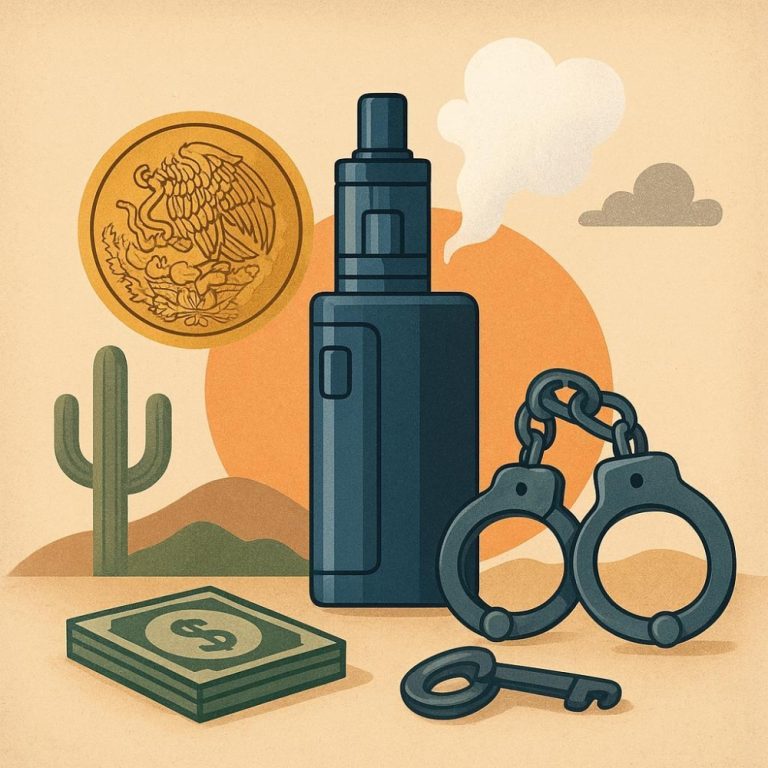

Selling vapes in Mexico can carry serious consequences,including steep fines and prison time. The restrictions cover businesses across the supply chain, from importers to retailers, while the rules for consumers can depend on the circumstances. Here’s what the law says about vape sales and who may be affected.
Table of Contents
The Penalties
Mexico’s Federal Health Law sets criminal penalties for commercial activity involving vapes and electronic cigarettes. A person convicted of an offense can face one to eight years in prison and a fine of 100 to 2,000 times the daily value of the UMA, the unit Mexico uses to calculate fines and other obligations.
The law covers activities including manufacturing, importing, distributing and selling vaping devices. As the fine is calculated in UMA rather than set at a fixed peso amount, its value in pesos can change as the unit is updated. The penalty in an individual case will depend on the conduct and the circumstances.
The restrictions focus on commercial activity; they do not automatically make every vape user a criminal. But selling online or discreetly does not,by itself,put a business beyond the law.
How the Rules Changed
Mexico’s restrictions have expanded from import controls into a broader prohibition. A constitutional amendment published in December 2024 barred activities related to electronic cigarettes, vapes and similar devices, giving the government a stronger basis for restricting the market.
The Federal Health Law sets out how the prohibition applies to businesses, including those involved in manufacturing, importing, distributing and selling vaping devices.the rules thus reach beyond product labels or packaging to cover commercial activity across the supply chain.
What It Means in Practice
for retailers and distributors, the risk may extend beyond keeping products in a shop.Importing, distributing or selling vapes may also expose a business to the penalties in the Federal Health Law. Before making decisions about stock, online listings or suppliers, businesses should get advice from a qualified Mexican legal professional.
Consumers should not assume that rules on commercial sales are identical to those on personal use or possession. anyone planning to travel with a vape or buy one in Mexico should check current guidance from the relevant authorities, as border and health rules may change. Informal sellers may also be unable to provide reliable data about a product’s contents or origin.
Mexico’s vape-sales restrictions create significant legal risks for people involved in the trade,but how the law applies can depend on the facts of a particular case. For advice, consult a qualified Mexican lawyer or the relevant government agency rather than relying on a seller’s assurance or a social-media post.


