

Sunday, July 20, 2025 | 2 a.m.
Editor’s note: “Behind the News” is the product of Sun staff assisted by the Sun’s AI lab, which includes a variety of tools such as Anthropic’s Claude, Perplexity AI, Google Gemini and ChatGPT.
The Food and Drug Administration has granted permission for Juul to continue selling its e-cigarettes, offering some reprieve to the embattled company that has faced significant challenges in recent years due to its role in fueling youth vaping addiction, according to the Associated Press.
On Thursday, FDA officials stated that research conducted by Juul demonstrates that their vaping products pose fewer risks to adult smokers, who may see health benefits from making a complete transition from traditional cigarettes to e-cigarettes.
What is an e-cigarette?
An e-cigarette (or vape) is a battery-operated device that heats a liquid — usually containing nicotine, flavorings and other chemicals — into an aerosol that users inhale. Unlike traditional cigarettes, e-cigarettes do not burn tobacco. Instead, they vaporize a liquid, producing less smell and a different chemical profile [1][2].
Why are teens attracted to e-cigarettes?
- Flavor variety: Sweeter flavors create more appealing experience than traditional tobacco products, making vaping more enticing and less harsh for first-time users [6][7][8].
- Social influence: Peer use and seeing family members or celebrities vape increase curiosity and social pressure [9][10].
- Marketing: E-cigarettes are extensively advertised with bright packaging and targeted ads that appeal to youth [9].
- Perceived lower harm: Many teens believe e-cigarettes are less harmful than smoking cigarettes due to their pleasant taste, masking the reality that they still contain nicotine and other harmful substances [6][11][12].
- Ease of use and concealment: Vapes are discrete, easier to obtain for some and don’t create the telltale smell of smoking [13][14].
- Technology appeal: E-cigarettes are seen as sleek, high-tech devices, often resembling USB drives or other gadgets, which appeals to teens interested in electronics and new technology [15][16].
Teen vaping statistics
Recent data shows concerning trends:
- In 2024, about 1.63 million U.S. middle and high school students reported using e-cigarettes in the past 30 days (~5.9% of students, a decrease from previous years) [17].
- At the peak in 2019, over five million teens reported current use; this number has since decreased by about two-thirds [17][18].
- Of those who vape, nearly 40% (over 620,000 teens) use e-cigarettes frequently, signaling a significant risk for nicotine addiction [18].
Why teen vaping is a public health problem
- Nicotine addiction: The teenage brain is highly susceptible to addiction. Nicotine can disrupt brain development, impacting learning, memory, attention, and increasing vulnerability to addiction [19].
- Long-term health risks: Early exposure increases the risk of future cigarette smoking and substance abuse [19].
- Physical health dangers: Chemicals in the vapor can damage the lungs and heart, and increase risks of respiratory, cardiovascular and neurological issues [20][21].
- Behavioral impact: Teen users may develop patterns affecting school, relationships, and overall well-being [16][19].
Why e-cigarettes are considered harmful
- Toxic chemical exposure: The vapor contains a mix of chemicals, including some known to be toxic, such as formaldehyde, acrolein and heavy metals like nickel and chromium. These can be inhaled deep into the lungs, potentially causing lung and heart problems — some of which have resulted in severe lung injuries and even deaths [19][22][23].
- Respiratory and cardiovascular risk: Emerging data link vaping to chronic lung disease, asthma, and cardiovascular risks. Chemicals in e-cigarettes can induce oxidative stress and negative effects on heart and lung function, even in people who have never smoked cigarettes [19][22].
- Unknown long-term effects: E-cigarettes are relatively new, so their long-term health effects are not fully known. Many ingredients and chemical byproducts formed during heating have not been thoroughly studied for their health impact [19][22][23].
- Secondhand emissions: Even bystanders can be exposed to potentially harmful chemicals [2].
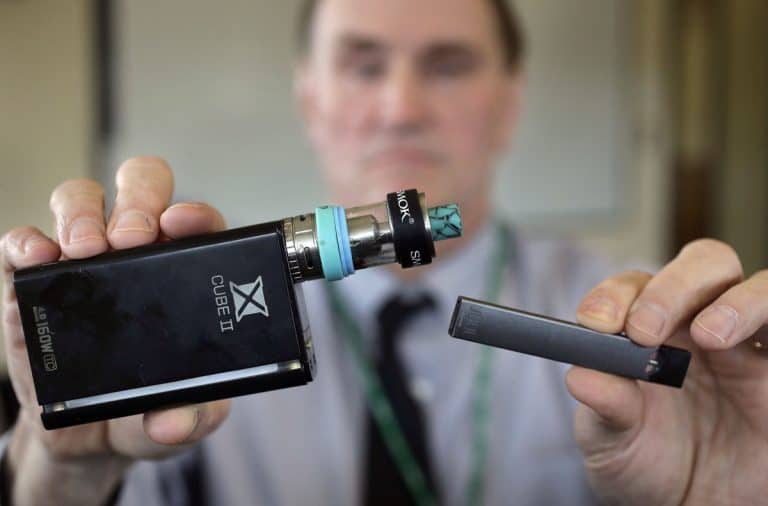
E-cigarettes can be useful for adults to help them quit using traditional tobacco products, though the vapor still carries similar health risks. Photo by: Craig Mitchelldyer / AP, file
Long-term health effects: Vaping vs. traditional smoking
Traditional cigarette smoking is well established as a leading cause of death and disease, resulting in damage to nearly every organ system:
- Extremely high risks of cancer, especially lung cancer (90% of lung cancer deaths are attributed to smoking)
- Chronic obstructive pulmonary disease (COPD), chronic bronchitis, and emphysema
- Heart disease and stroke
- Immune and reproductive harm
- Generates over 7,000 chemicals, many of which are known carcinogens and toxins
- Linked to about 480,000 deaths each year in the U.S. alone [24][25]
While generally delivering fewer toxins than cigarettes (about 2,000 chemicals, as opposed to 7,000 in traditional cigarettes), e-cigarettes are still not safe and have their own set of long-term health concerns:
- Respiratory harm: Can lead to lung injury (EVALI) and is associated with increased risk of respiratory diseases such as asthma and chronic bronchitis [20][22]
- Cardiovascular effects: Both smoking and vaping affect heart and blood vessel health, though the negative impact appears less severe with e-cigarettes than with smoked tobacco [26]
- Cancer risk: While likely lower than with cigarettes, long-term exposure to e-cigarette aerosols may still increase the risk of cancer and adverse reproductive outcomes [27]
Marijuana and e-cigarettes
Marijuana is not an e-cigarette, but many e-cigarette devices can be used to vaporize marijuana or THC oils. Cannabis vaping has become increasingly common, especially among youth [16][28]. Vaping marijuana can involve especially high concentrations of THC, with potential risks including lung injury and exposure to contaminants [28][29].
Potential benefits for adult smokers
While harmful for youth and nonsmokers, e-cigarettes may offer some benefits for adult smokers seeking to quit:
- Harm reduction: Switching from smoking to vaping exposes adults to fewer toxic chemicals. Studies suggest improved physical and mental health for adults who switch [30].
- Smoking cessation aid: E-cigarettes can help some smokers reduce or quit cigarette usage, though not all studies agree and no e-cigarette is officially approved as a quit aid in the U.S. [31][30].
E-cigarettes present a complex public health challenge. While they may offer harm reduction benefits for adult smokers, they pose significant risks for youth and nonsmokers. The appealing flavors, modern design, ease of concealment and perceived lower risk make e-cigarettes particularly attractive to teens, creating a new generation of nicotine-dependent users. The scientific consensus is clear: E-cigarettes are not safe and should not be considered risk-free, especially for young people whose brains are still developing.
Sources
1. https://www.cdc.gov/tobacco/e-cigarettes/about.html
2. https://www.acs.org/pressroom/tiny-matters/vaping-vs-smoking.html
6.https://pmc.ncbi.nlm.nih.gov/articles/PMC5125087/
7. https://www.cdc.gov/tobacco/e-cigarettes/why-youth-vape.html
8. https://newsinhealth.nih.gov/2019/02/vaping-rises-among-teens
9. https://www.fda.gov/news-events/press-announcements/youth-e-cigarette-use-drops-lowest-level-decade
10. https://truthinitiative.org/press/press-release/significant-drop-youth-e-cigarette-use-marks-progress-nearly-40-teens-who-vape
11. https://www.rch.org.au/kidsinfo/fact_sheets/E-cigarettes_and_teens/
12. https://www.med.unc.edu/fammed/2019/10/25/e-cigarette-flavors-decrease-perception-of-harm-among-youth/
13. https://www.franciscanhealth.org/community/blog/why-vaping-is-dangerous-for-teens
14. https://www.washington.edu/news/2022/05/12/smokers-who-switch-to-e-cigarettes-may-adopt-other-healthy-routines/
15. https://www.gov.scot/publications/vaping-youth-perceptions-attitudes-evidence-briefing/pages/6/
16. https://bmjopen.bmj.com/content/13/3/e068466
17. https://pmc.ncbi.nlm.nih.gov/articles/PMC9689130/
18. https://jamanetwork.com/journals/jamanetworkopen/fullarticle/2707425
19. https://nida.nih.gov/publications/drugfacts/vaping-devices-electronic-cigarettes
20. https://pmc.ncbi.nlm.nih.gov/articles/PMC7348661/
21. https://pmc.ncbi.nlm.nih.gov/articles/PMC10572885/
22. https://www.hopkinsmedicine.org/health/wellness-and-prevention/5-truths-you-need-to-know-about-vaping
23.https://www.cancerresearchuk.org/about-cancer/causes-of-cancer/smoking-and-cancer/is-vaping-harmful
24. https://www.medicalnewstoday.com/articles/vaping-vs-smoking
25. https://www.heart.org/en/healthy-living/healthy-lifestyle/quit-smoking-tobacco/is-vaping-safer-than-smoking
26. https://www.henryford.com/blog/2024/06/the-health-risks-of-e-cigarettes-vs-traditional-cigarettes
27. https://www.ahajournals.org/doi/10.1161/ATVBAHA.123.319575
28. https://www.npr.org/2025/02/03/nx-s1-5246302/vape-marijuana-weed-pesticides-chemicals
29. https://www.ucsf.edu/news/2022/11/424191/marijuana-and-e-cigs-can-harm-heart-traditional-cigarettes
30. https://pmc.ncbi.nlm.nih.gov/articles/PMC7685201/
31. https://truthinitiative.org/research-resources/emerging-tobacco-products/e-cigarettes-facts-stats-and-regulations


0 Comments