
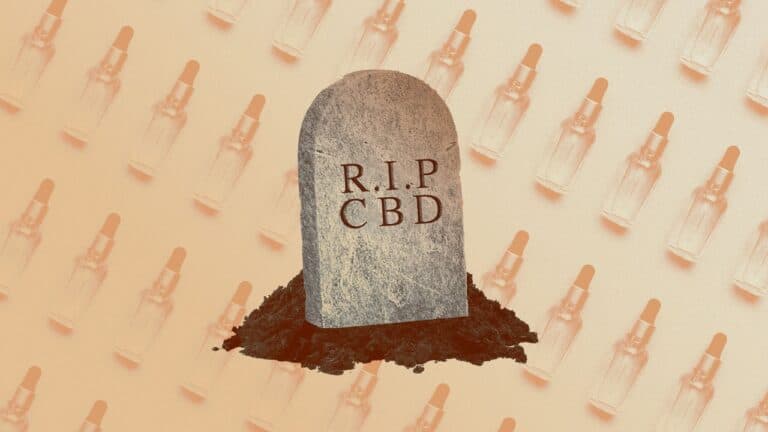

CBD beauty, once hailed as a groundbreaking trend in the beauty industry, is now bidding farewell. The rise and fall of CBD-infused skincare and beauty products have taken the industry by surprise. It seemed like overnight, CBD became the star ingredient that everyone was talking about.
In 2017, Claudia Mata unintentionally became the founder of a CBD skincare brand when she introduced her plant-based lip balm to the beauty media. The inclusion of CBD in her formula quickly became the center of attention. The media couldn’t stop discussing it, overshadowing other noteworthy features of her product.
Allure was among the first outlets to cover Mata’s CBD beauty line, Vertly, and this coverage marked the beginning of a CBD beauty revolution. The interest in CBD beauty reached its peak in December 2019, with searches for “CBD beauty” hitting 57.2K, according to consumer-insights platform Spate.
At the time, there were limited studies supporting the skincare benefits of CBD. However, dermatologists acknowledged its potential for soothing inflammatory conditions like acne and eczema. Some researchers even explored its ability to treat certain skin cancers. The allure of CBD beauty extended beyond its potential benefits. The intriguing and mysterious reputation of CBD captured the imagination of beauty marketers. Could this compound that is associated with getting “high” also unlock the secret to youthful, radiant skin? It was a question that intrigued consumers.
With the continued interest in CBD beauty products, Allure published a shopping guide in April 2021 showcasing 21 CBD beauty products. However, as of today, more than half of those products have been discontinued. The once-inundated pitches for CBD-infused serums, eye creams, and lip glosses have significantly decreased or vanished.
Prominent CBD beauty brands like Lord Jones and Happy Dance have either ceased operations or shut down entirely. CBD beauty seems to have come and gone almost as quickly as it arrived. So, what led to its downfall?
One could argue that CBD beauty faced the same fate as any other trend – it simply ran its course. But a closer examination reveals that the challenges of selling topical products with an ingredient derived from a not-yet universally legal source played a significant role.
Although cannabidiol itself is not illegal, the association of CBD with marijuana raises concerns for e-commerce platforms and advertising channels. Many software systems and platforms, such as Shopify and Facebook, have strict rules and restrictions when it comes to CBD-related products. Brand founders faced obstacles such as expensive insurance, high-risk payment processing, and rejection from retailers due to the legal complexities surrounding CBD.
CBD beauty brands also encountered obstacles in marketing and promotion. Shadow-banning on social media platforms, such as Instagram, hindered organic reach and visibility. CBD-related words and content often faced restrictions, leading brands to create separate websites to navigate around these challenges.
Furthermore, the global landscape regarding CBD remains complex. In many countries, CBD is either illegal or available only by prescription. Even where it is legal, it can be met with skepticism or disapproval. These regulatory uncertainties have made it difficult for brands to expand globally and distribute their CBD products.
Another aspect that cannot be ignored is the inequity within the CBD beauty industry. Many CBD beauty brands are owned by predominantly white individuals who profit from a plant that has disproportionately affected Black and Latinx communities, resulting in incarceration rather than opportunity. Attempts have been made to address this issue, such as the Floret Coalition, but they are still limited.
It is challenging to gauge the extent of CBD beauty’s impact on consumers. However, according to consumer insights platform Spate, searches for CBD beauty have decreased by 63.1% year over year. Some brands that heavily invested in CBD, like WLDKAT and Saint Jane, have reformulated their products to exclude CBD and distance themselves from the declining trend.
Despite the setbacks, CBD beauty proponents remain hopeful. Given the right regulatory conditions and clinical evidence supporting the benefits of cannabidiol, CBD beauty could make a comeback. In the meantime, alternative ingredients with soothing properties, such as arnica and calendula, may rise in popularity as brands seek alternatives to CBD.
As we bid farewell to CBD beauty, it serves as a reminder that trends come and go, and the beauty industry is always evolving. While CBD may have taken a back seat for now, it has undoubtedly left a lasting impact on the industry. Only time will tell if CBD beauty will make a triumphant return or if it will remain a defining moment in beauty history.


0 Comments