

State-Level Vape Bans: A Shift in Malaysia’s Public Health Policy
KUALA LUMPUR, April 28 — Public health experts and anti-tobacco advocates are expressing support for recent actions taken by several Malaysian state governments to ban the sale of vape products. This move comes despite the legality of these products at the federal level of governance.
State Governments Take Action
As of now, four state governments have instituted or are preparing to institute bans on the sale of e-cigarettes and vaping devices:
- Johor: Initiated a ban on e-cigarettes and vapes effective January 1, 2016, by refusing to issue business licenses.
- Terengganu: Plans to enact a sales ban beginning August 1, 2025, via the same licensing strategy.
- Kelantan: Has consistently denied approval for vape shop business licenses.
- Perlis: The Perlis Fatwa Committee has declared a ban on e-cigarettes and vapes.
- Kedah: A proposal is in the works to implement a ban similar to Terengganu’s.
- Penang: Is considering a ban and is awaiting proposals to be discussed.
- Selangor: Also plans to review a proposal to ban e-cigarette sales.
Challenges in Regulation
Despite the enactment of the Control of Smoking Products for Public Health Act 2024 (Act 852), the Malaysian Public Health Physicians’ Association (PPPKAM) has highlighted considerable challenges regarding enforcement. Monitoring the actual components of vape liquids is problematic, as these products may contain harmful ingredients that are difficult to identify. Furthermore, local councils’ issuance of business licenses can sometimes be exploited for the sale of vape products.
The Call for Stricter Regulation
The Smoke Free Malaysia Initiative, led by the Federation of Malaysian Consumer Associations (Fomca), commended the state governments’ moves as a “progressive step” towards achieving public health goals in line with the World Health Organization’s Framework Convention on Tobacco Control (WHO FCTC). The ambition is to reduce the usage of smoking products to below 5% by 2040.
Concerns About Vape Safety
There are ongoing concerns regarding the safety of vaping products. PPPKAM expressed doubts about the effectiveness of safety standards that accompany the new regulations, especially concerning battery-related hazards and the potential presence of dangerous chemicals in vape liquids. They stressed that partial regulation tends to generate insufficient results in combating smoking-related illnesses, advocating for an outright sales ban along with stringent enforcement measures.
Health Risks Associated with Vapes
Deputy Inspector-General of Police (IGP) Ayob Khan Mydin Pitchay has identified the presence of narcotics, including methamphetamine and fentanyl—an opioid significantly more powerful than morphine—in vape liquids within Malaysia. This revelation has escalated concerns regarding the health risks posed by vaping, particularly among youth.
Current Status of Vape Products in Malaysia
Malaysia’s vape market is divided into two main categories: open systems that enable the usage of refillable liquids and closed systems, which include pod-based or disposable vapes. The latter type typically comes with pre-packaged liquids that cannot be replaced.
Legal Implications of State Bans
The initiation of state bans on vaping essentially creates a de facto prohibition, as companies cannot receive business licenses to sell in these localities. Although possession and usage of e-cigarettes remain legal in these areas, the inability to purchase them legally restricts accessibility.
Federal Regulations and the Future of Vaping in Malaysia
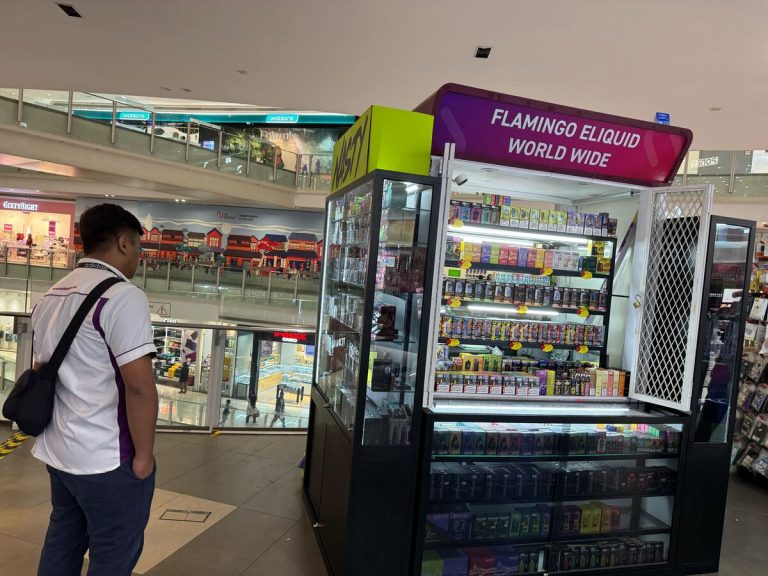
At the federal level, Act 852 restricts where and how vaping products can be displayed for sale. Retail displays of vaping products outside specialized shops were prohibited as of April 1, though reports suggest that some major retailers continue to display these items. New regulations, including graphic health warnings on packaging and restrictions on nicotine content, are expected to take effect by October 1, 2024.
In a notable shift, the Malaysian Ministry of Health recently removed liquid nicotine from the controlled substances list, a move that allowed for the taxation of nicotine-based vape liquids starting on May 1, 2023. This change followed legal challenges from anti-tobacco groups demanding a review of this decision.
Emerging Trends and Youth Engagement
A study by Milieu Insight revealed that Malaysia currently has a high prevalence of alternative nicotine product usage, notably among those aged 20 to 29. More than half of Malaysian smokers are projected to transition to using e-cigarettes or heated tobacco products within the next six months, indicating a significant shift in consumption patterns.
Government Stance and Future Policies
Prime Minister Anwar Ibrahim’s administration has reconsidered the “generational end game” (GEG) policy, which aimed to eliminate tobacco and vaping products for anyone born after 2007, due to claims of its unconstitutionality. The ongoing decisions by state governments to implement bans on e-cigarettes may further complicate federal taxation intents and public health strategies.
Conclusion
This evolving scenario in Malaysia showcases the complexities surrounding the regulation of vape products. As state governments mobilize actions towards prohibition and enforcement, the overarching goal remains to safeguard public health, especially among the youth. The debate over vaping’s safety, coupled with regulatory frameworks, continues to be a focal point of public health discussions in Malaysia.


0 Comments