
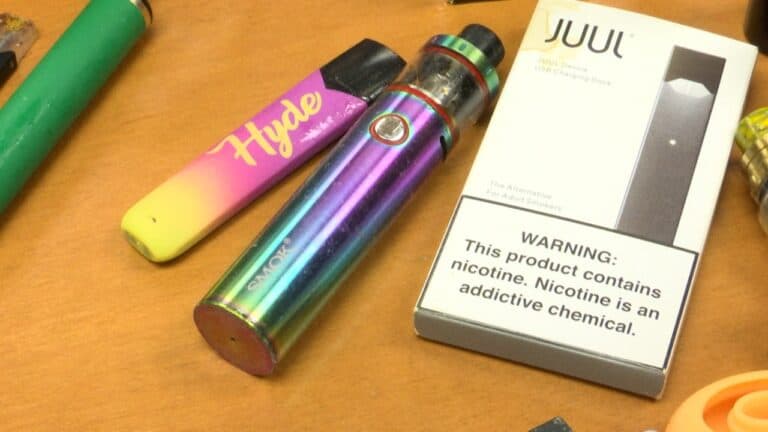

Title: ‘One Vape Can Equal 40-50 Cigarettes’: Indiana Teens And Vapes
Teenage vaping has become a pressing issue in Indiana, with the alarming implications of harm it poses to young individuals. Recent statistics from the Indiana Youth Tobacco Survey reveal that 50% of high school students and 10% of middle school students believe that obtaining tobacco products is relatively easy. While the legal purchasing age for tobacco was increased to 21 years of age in July 2020, this measure alone may not be sufficient to combat the growing trend of vaping among teenagers.
Shannon Giles, the Tobacco Prevention and Cessation Coordinator for Tobacco Free Vigo and Chances and Services for Youth, suggests that while cigarette use is declining, vaping is rapidly taking its place. Some counties in Indiana have resorted to issuing citations and even arrests for underage vaping at school. Giles emphasizes the need for a holistic approach to tackle this problem, starting with prevention education and an evaluation of both the behavioral and physiological aspects of addiction.
Giles highlights a disturbing fact: the nicotine content in a single vape can be equivalent to smoking 40 or 50 cigarettes. This high nicotine concentration has a more profound impact on developing brains compared to adult brains. To address this epidemic, Southwest School Corporation installed vape detectors several years ago, enabling them to intervene and educate students about the addictive nature of vaping. Those caught vaping receive citations but are also given the opportunity to participate in the In-Depth program, which aims to educate and support students in quitting vaping.
Chris Stitzle, the superintendent at Southwest School Corporation, has witnessed firsthand the impact of vape detectors and the positive effect they have had on students. Many young individuals who had been caught vaping expressed a strong desire to quit this harmful habit. Giles emphasizes the importance of helping students understand the risks associated with vaping and providing them with the necessary resources for support.
Addressing the issue of teenage vaping requires a multifaceted approach. In addition to educating students on the dangers and consequences of vaping, it is crucial to address mental health and confidence aspects. Rejecting peer pressure and making the decision to steer clear of vaping can be challenging for young individuals, making support and understanding essential in helping them quit.
All stakeholders, including schools, parents, and community organizations, should work together to raise awareness about the dangers of vaping and offer resources for prevention and cessation. By addressing both the psychological and physiological aspects of addiction, we can pave the way for a healthier future for Indiana’s youth.


0 Comments