

Potential Legislation Threatens CBD Stores in Alabama
In the vibrant atmosphere of Downtown Mobile, Alabama, a rainy day might encourage many to snuggle up and enjoy a peaceful nap. But for some, the struggle to fall asleep is very real, leading them to seek alternative solutions to over-the-counter sleep aids.
The Rising Popularity of CBD for Sleep
Take for example a psychology graduate student who visited Cannabama, a local CBD store. After running out of her CBD gummies, she was eager to replenish her supply. While she has a prescription for traditional sleep medications, she prefers natural alternatives like CBD, emphasizing, “I just want to go to sleep,” highlighting a growing preference among people favoring holistic health options over pharmaceuticals.
Concerns About New Legislation
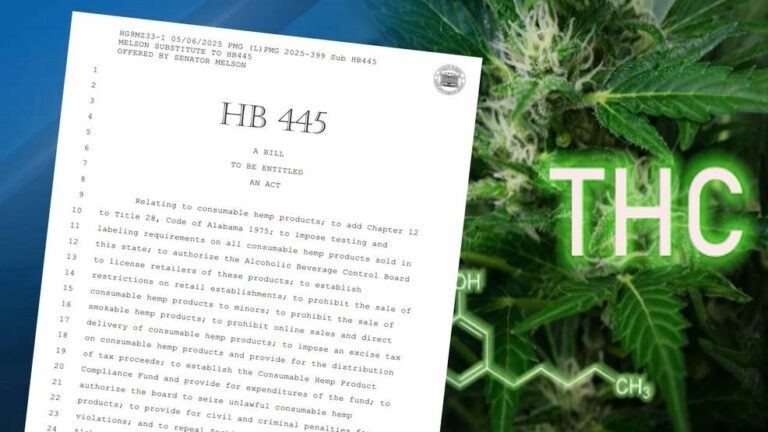
However, the comfort of relying on CBD may soon be threatened. Alabama’s House Bill 445 is on the governor’s desk and poised to transform the landscape of CBD regulations in the state. If signed into law by Governor Kay Ivey, the implications could be dire for local businesses like Cannabama.
Store owner Jennifer Boozer, who has championed CBD and hemp products for years, expressed serious concerns: “Well, I become a felon. A Class C felon.” The bill aims to establish tighter controls over CBD manufacturing and sales, reflecting a legislative desire to implement more oversight in an industry that is often described as having little regulation.
The Proposed Restrictions
The recent bill proposes to empower the Alcoholic Beverage Control (ABC) Board as the regulatory body overseeing this sector, introducing limits around the forms and potency of CBD products available for consumers. Specifics include:
- A cap of 10 milligrams of CBD per serving.
- Products must be individually wrapped, limited to packs of four.
- A ban on any smokeable CBD products.
Jennifer Boozer estimates that if the bill is enacted, she could potentially lose as much as 90% of her sales due to these restrictions. Many of her existing products, currently legal, could become illegal overnight. “Can I survive on the product selection that the bill allows me?” she questions, underscoring the devastating impact this legislation could have on businesses across the state.
The Broader Impact on the State
Advocates for the bill believe it will contribute additional tax revenue from the remaining legal products. However, Boozer, along with many other opponents, fears a drastically reduced market will actually harm the state’s finances. The potential closures of numerous CBD stores may translate into a significant loss of current tax income. “I will lose 90% of the products that people buy day in and day out,” she states, pointing out the irony that while CBD remains legally questionable, people still find ways to obtain it illegally.
Protests and Public Opposition
In light of these impending changes, Boozer and fellow advocates are rallying public support against the bill. A protest is slated to occur at Court Circle in downtown Montgomery this Saturday, aiming to persuade Governor Ivey to reconsider signing House Bill 445 into law. The sentiment shared by many is that the bill could derail the growth of a beneficial industry, ultimately impacting customers’ access to natural remedies for a variety of health issues, including sleep disorders, Parkinson’s disease, and more.
Conclusion
The debate surrounding House Bill 445 raises significant questions about the future of CBD regulation in Alabama, alongside the broader implications for public health options. As Alabama stands on the brink of potentially redefining its stance on hemp-derived products, both consumers and business owners alike are left anxiously waiting for the governor’s decision.


0 Comments