
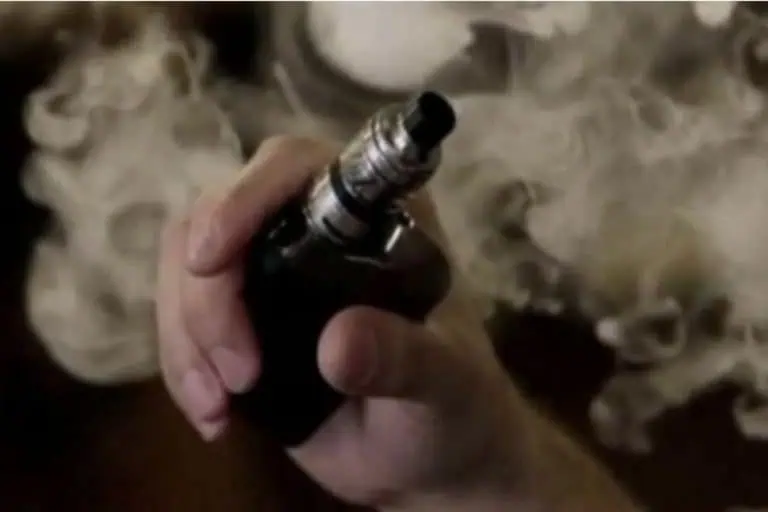

AUSTRALIA, which has one of the most restrictive tobacco and vaping policies in the developed world, has raised excise taxes on tobacco by 800 percent since 2010. This punitive approach has backfired.
“Australia has seen illicit cigarette sales surge to over 40% and illicit vape sales to over 95% even after a huge increase in law enforcement funding and focus. Australia’s excise tax collections have plummeted by 55% in just five years, from $16.3 billion in 2020 to just $7.4 billion. The flourishing illicit trade in cigarettes and vapes is also fueling organized crime and violence,” said Rohan Pike, a security expert with 25 years of police and customs experience at the Australian Federal Police and the Australian Border Force.
Pike was one of the resource persons during the recent hearing on House Bill 11360, which seeks to curb the illicit trade in cigarettes and tobacco products, held by the Senate Committee on Ways and Means, chaired by Senator Sherwin Gatchalian. The Bill proposes a schedule of excise tax increases, with 2% increases every even-numbered year starting January 1, 2026, and 4% increases every odd-numbered year beginning January 1, 2027. It also provides for a unified excise tax rate for freebase and nicotine salt vapor products.
Pike has led successful and high-profile international cases against fraud, trade crime, foreign bribery, corruption, and money laundering. He has provided advice on fighting illicit trade to the governments of Australia, Papua New Guinea, Timor Leste, and Pakistan, among others. He helped the Australian Retailers Association establish Australians to Stop Counterfeiting and Piracy (AUSCAP), a coalition of industry groups, businesses, and trademark owners dedicated to stopping illegal trade.
In the past two years, Pike said over 200 arson attacks on shops and warehouses tied to illegal tobacco have occurred in his home state of Victoria. He lamented the unprecedented spate of homicides, kidnappings, extortion, armed robberies of legal tobacco, and arson attacks perpetrated by criminal gangs fighting over the huge profits generated by the lucrative illicit tobacco and vapes black market. A pack of legal cigarettes in Australia costs three times more than a pack of smuggled cigarettes.
Meanwhile, in the Philippines, a pack of legal cigarettes currently retails for around P140, while a pack of smuggled cigarettes sells for as low as P40 in the black market—almost three and a half times cheaper. Local e-cigarette industry representatives present during the hearing estimated that illicit vaping products account for up to 80 percent of the market.
Pike warned that the country’s increasing adolescent smoking rates suggest that the price disparity between legal and illicit cigarettes and vaping products is attracting new smokers and vapers, which in turn is driving the black market.
Information presented during a previous hearing revealed that adult smoking rates in the Philippines surged from 18.5 percent in 2021 to 23.2 percent in 2023 after plateauing for nearly a decade.
As with Australia, the Philippine government’s excise tax collections have declined sharply. After increasing substantially in the first few years after the enactment of the landmark Sin Tax Law, excise tax collections have decreased from P176 billion in 2021 to P160 billion in 2022 and further to P135 billion in 2023. In 2024, collections dropped further to P134 billion.
“The Philippines should learn from Australia’s policy mistakes. We’ve seen the chaos that follows when taxation overshoots its mark,” Pike said.
He recommended a three-pronged, proportionate, and evidence-based approach to counter illicit trade on tobacco and vaping products in the Philippines. First, set an appropriate tax rate to suppress the key driver of illicit trade. Second, strengthen enforcement and prosecution. Third, consider tobacco harm reduction strategies.
Pike said the revenue returns for both Australia and the Philippines have followed a classic “Laffer Curve” response in which the sweet spot where the excise rate for tobacco maximized revenue returns was reached some years ago. “Economic theory shows that further tax increases will not increase revenues, it will only accelerate the decline. Both of our governments have misread the effect the explosion of the illicit market would have on returns,” he added.
Pike said that taxation on tobacco products to reduce public health risks, curb tobacco use, and generate revenue makes sense in principle. “Unfortunately, our governments pulled that lever too far and have unbalanced the market. The good news is the Philippines has a chance to prevent making the same mistakes with vapes as you have with cigarettes.”
Pike noted that Australia and the Philippines face similar difficulties in border protection. Both countries have vast coastlines with many remote locations that serve as windows for illicit products.
The Philippines is also located in the middle of several countries that are key sources of illicit tobacco, including China, Cambodia, Vietnam, and Indonesia.
He acknowledged some welcome enhancements for law enforcement in House Bill 11360, but opined that freezing or lowering the excise rate would be the most effective tool in suppressing the key driver of illicit trade.
Pike recommends incentivizing reduced-risk nicotine alternatives including vapes through proportionate tax measures combined with education campaigns.
“Taking a proportionate, evidence-based approach will enable the Philippines to lower smoking prevalence, stabilize revenue collection, and keep Filipinos safer and healthier,” he said.


0 Comments