
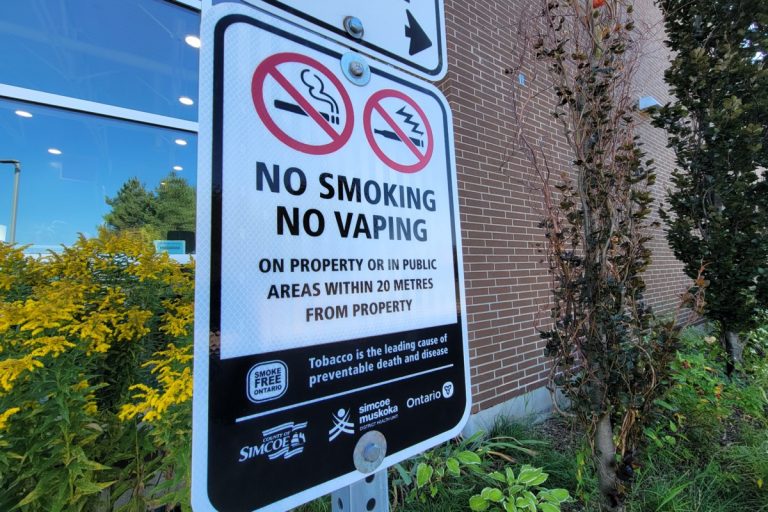

Simcoe County Schools Combat Vaping with New Detectors
As concerns surrounding vaping in schools intensify, the Simcoe County District School Board (SCDSB) is proactively addressing the issue by installing approximately 125 vape detectors across its 15 secondary schools. The total estimated cost for this initiative is set at $300,000.
Stricter Regulations for Vaping in Schools
The installation of these vape detectors comes on the heels of an Ontario government announcement aimed at strengthening regulations regarding student usage of vaping products and cigarettes on school grounds. According to Sarah Kekewich, communications manager for the SCDSB, vaping has emerged as a significant concern across the province.
In April 2024, the Ontario government allocated $30 million in the budget specifically for the purpose of installing vape detectors and implementing other security upgrades in schools. This is part of a broader initiative to create safer learning environments for students.
Updated Student Codes of Conduct
In response to the growing problem of student vaping, various school boards in Ontario have begun revising their student codes of conduct. These updated codes include harsher penalties for students found in possession of or using vaping devices while on school property. Under these new guidelines, students caught with vaping products are required to surrender them, and their parents will be notified.
“SCDSB schools work closely with the Simcoe Muskoka District Health Unit to educate students about the health impacts of vaping and support the enforcement of smoke-free schools,” stated Kekewich. The board emphasizes its commitment to progressive discipline practices for managing incidents involving vaping among students.
The Anatomy of Vapes
Vaping devices, commonly referred to by terms like e-cigarettes, mods, or vape pens, are available in numerous styles ranging from box-like shapes to USB-like sticks. Despite their variety, all these devices share the same fundamental components: a mouthpiece, a heating element, a liquid tank or pod, and a battery. The vaporization process involves heating a liquid solution until it transforms into an aerosol for inhalation, which can contain nicotine or may be nicotine-free.
Statistics: Vaping Among Students
According to the Ontario Student Drug and Health Survey, the percentage of students in Grades 7 to 12 reporting use of vaping products doubled from 11% in 2017 to 23% in 2019. Alarmingly, 13%—which equates to around 105,600 students—were reported to be using these products on a weekly or daily basis.
The most recent report from 2023 indicates that while vaping rates across Ontario dipped to 13% last year, the problem remains prevalent in certain areas. Specifically, the Simcoe Muskoka District Health Unit reported that in Simcoe and Muskoka, 32% of students in Grades 7 to 12 indicated they had used e-cigarettes in the previous year, and this figure climbed to a concerning 43% among high school students, exceeding the provincial rate significantly.
The Role of Vape Detectors
Vape detectors are designed to monitor environments not only for vape and smoke emissions but also for loud noises and unauthorized tampering with the devices. These state-of-the-art detectors will alert school administrators immediately through a web portal, notifying them of any vaping activity detected.
Funding Challenges and Responses
While the complete cost for the installation of vape detectors is $300,000, SCDSB reports that it received only $231,200 from the Ministry of Education designated for safety infrastructure improvements across its 100+ schools. In comparison, the Simcoe Muskoka Catholic District School Board secured $104,000 through the same fund, which is anticipated to cover expenses for not just vape detectors but also other security enhancements like cameras and motion sensors.
Collaborative Efforts to Combat Vaping
In addition to the installation of vape detectors, the Simcoe Muskoka Catholic District School Board has updated its own student code of conduct to address vaping effectively. They are involved in a pilot project alongside the SCDSB and four other Ontario school boards that features an innovative app known as Quash. This application, developed through a partnership between the Lung Health Foundation and the Ontario Ministry of Education, provides students with non-judgmental resources to help them quit smoking or vaping.
Pauline Stevenson, director of communications for the Catholic Board, expressed confidence in their proactive strategy, stating, “Our board is already very active in its work to address vaping in schools, and we are having some success.” Furthermore, the Simcoe Muskoka District Health Unit’s Smoke-Free Program is collaborating with educational institutions to implement programs like Not An Experiment, specifically tailored to combat youth vaping.
Conclusion
The installation of vape detectors in Simcoe County schools represents a significant step forward in addressing the vaping epidemic among youth. With educational initiatives, updated regulations, and proactive measures in place, school administrators and health organizations are working together to foster a healthier environment for students.


0 Comments