

This article was previously published in the print edition of Drum Soft Life.
Following many countries’ move towards decriminalising medicinal and/or recreational use of the herb, a CBD shop has popped up in almost every mall.
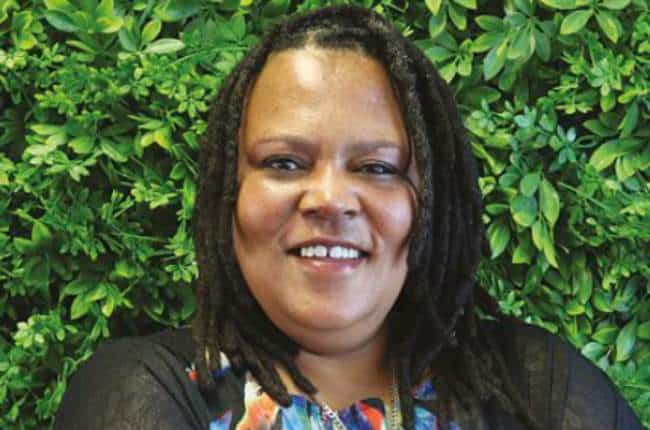
For Heidene Lawrence (47), a local cannabis entrepreneur, this potent plant has become lifesaving as she says it helped her cope with her debilitating epilepsy.
“My first seizure was an absence seizure, at the age of 27,” says the change management and leadership development professional who’s also trained and certified in coaching, communication, SAP, training and transformation methodologies.
“I was alone, in the kitchen [when I had the absence seizure – which ‘causes you to blank out or stare into space for a few seconds’, according to Johns Hopkins Medicine].”
“At first, I thought I was just tired and that I had blanked out for a few seconds,” Heidene recalls.
“I composed myself and carried on for the rest of the day.”
It’s been 20 years since her first episode and, while she remembers her first seizure like it was yesterday, she does not know what triggered it.
“I really don’t know,” she tells Drum.
“When I was 27, my son (Dillan) was still very young, I had just started a new job, and didn’t have time to consider major impacts.
“At that point, I stopped driving, drinking, flashing lights and loud sounds. After about two years, my seizures stabilised, and life returned to normal.
“When I turned 40, it was almost like the seizures started playing catch-up. Suddenly I was triggered by sunlight, loud sounds, fish, flashing lights, anxiety, fear, stress, sugar, hormones, conflict, and certain foods.
“I was experiencing pre- and postmenstrual seizures. My life stood still. For almost three years. I had high levels of inflammation, lost most cognitive skills, and was unable to walk, talk, read, or write. At some point I needed to decide if I was going to stay stuck or move. I chose the latter.”
Read more | The natural cell-ution of aesthetics | 4 reasons to try stem cell therapy
“I chose one meal a day, made use of cannabis when it was provided, and decided to fight for my life. The Boksburg-born entrepreneur’s brother “introduced me to the healing power of cannabis, as a last resort because nothing was relieving my situation”, she tells Drum.
But it was a long journey to learning about the benefits of medical cannabis and eventually starting her own cannabis business, Tubby’s Kitchen, dedicated to helping others suffering from chronic pain and various other conditions. There are many types of seizures and Heidene had experienced a couple of them. Her grand mal experience was an eye-opener. That’s when the resident of Ennerdale, south of Lenasia, realised that she may have epilepsy.
“The key moment was waking up from a grand mal seizure with a bitten tongue, an aching body, and a wet bed, that I realised something was seriously wrong.”
“It was only after being educated about the condition that I realised there were a few other symptoms as well.”
A grand mal seizure is the old term for tonic-clonic seizures, according to Johns Hopkins Medicine. This kind of seizure leads the patient to having violent muscle contractions and losing consciousness.
The health research university, considered among the best in the world, explains why the term has changed.
“Tonic-clonic seizures, formerly known as grand mal seizures, comprise two stages: a tonic phase and a clonic phase. These intense seizures can be frightening to experience or observe, as extreme muscle spasms may temporarily arrest breathing.”
After Heidene realised she may be suffering from epilepsy, she first turned to her mom, a health professional, for help.
“My mom has been part of my journey since the start. Being a qualified medical professional, she ensured that I sought the correct treatment and stood by my side.
“I was prescribed Epilim and Lamictal and used it very successfully for quite some time before my condition took a toll for the worse. After my 40s, my medication was adjusted with the help of a neuro specialist.”
Read more | Here are things to put in your “in case I go missing bag”
Heidene also leaned on her Christian faith. “Faith, and the knowing that with God in my life, I was protected [got me through]. I tattooed Psalm 23 on my back as a constant reminder; sang worship songs and remained in constant prayer. Shannon Evette, from the Sanctuary Global has been my Spiritual Teacher and taught me, that trusting the Lord is the start and end of every challenge.”
The ‘miracle moment’ in Heidene’s journey came when her brother convinced her to give medical cannabis a try.
“My brother introduced me to the healing power of cannabis as a last resort because nothing was relieving my situation.”
She believes more needs to be done by the government in making medical cannabis an option for people with debilitating illnesses like hers.
“From my experience, cannabis has been proven to assist disabled epileptic individuals with seizures. Epidiolex is the only FDA-approved medication made from cannabis to treat any medical condition. Government can ensure that this medication is available for people in South African hospitals.”
“Epileptics can be included in medical trials for the government’s CBD and medical THC products, as opposed to that of pharmaceutical and business. And flexibility [can be] applied when cannabis is found on their (sufferers’) person. Epileptics can drive social enterprise in the cannabis industry in townships.”
Not only did CBD help her manage her symptoms better, but it inspired the transformation management professional to start her business, Tubby’s Kitchen.
“I must admit, like so many others, I was not open to cannabis the first time,” Heidene shares.
“But after trying it and finally experiencing a reduction in countless daily seizures. My mind was made up. I could never go back! Because that meant so many others in my situation will never experience freedom from seizures either.”
“During the process, I was forced to get my reading skills back and walk in malls again, despite my anxiety, fear of loud noises, and being in crowded spaces. I was given my life back and wanted others to feel the same way, that’s when the idea of Tubby’s Kitchen was born.”
She started the business with her son, Dillan. They began by adding CBD to South African tea leaves such as Rooibos, Buchu and Honeybush. Then they started manufacturing their own range of teas, chilli pastes and spices to give customers more choice.
“Using only the freshest seasonal ingredients in all our products, it has taken years to bring every ounce of natural taste to perfect the required measures and calculation to all Tubby’s delightful recipes,” the mom and son say.
“We pride ourselves on the fact that none of our products are infused with isolate or chemically produced CBD oil, but instead that it is the natural CBD cannabis plant–we keep it all natural and straight from the farm.”
The brand is becoming so popular, it is even available on takealot.com now. When she started using medical cannabis, Heidene was unemployed so she couldn’t afford much of it, so she started microdosing. :Starting with the FICA oil was very expensive at the time.
Read more | Ntombie debuts book on grief and depression – ‘I had to revisit painful memories’
“I was also unemployed, and I didn’t want to be a burden on my family. Finding an alternative route was the best option.
“That’s when I discovered that incorporating cannabis into my teas and daily cooking will be much more affordable. Our bodies have a natural endocannabinoid system, so keeping it filled with CBD generated faster healing and relief for me from my seizures.”
“Small doses on a constant basis, instead of large doses over stretched-out periods, out of the comfort of my kitchen [helped]. [Microdosing] has become a natural, healing and affordable way of life,” she explains.
The Tubby’s Kichen owner believes the government could be more intentional in supporting the local cannabis industry, including recognising that medical cannabis entrepreneurs need SMME support too, She hopes the government will recognise entrepreneurs like her – “a disabled BEE female who started in a kitchen, moved to a garage, and now has a GMP Factory – started on SASSA grant – to produce cannabis goods”. She believes this is an injustice.
“The sharing of ideas or employment in the cannabis industry by government needs to be explored.”


0 Comments