
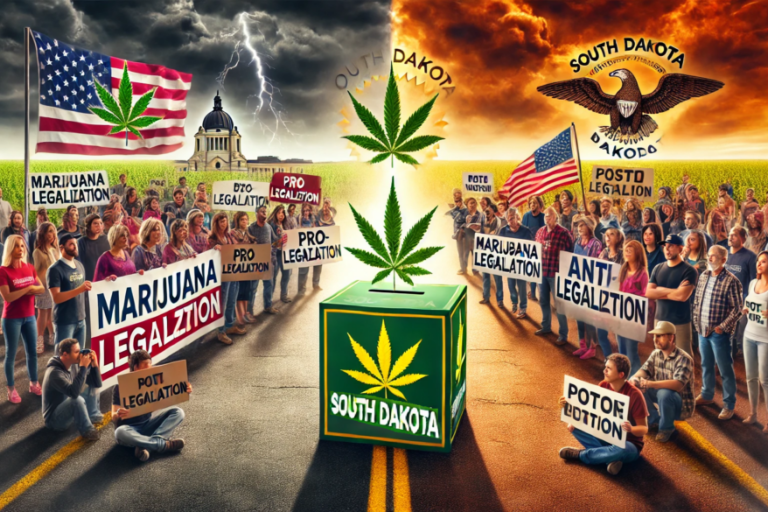

South Dakota’s Cannabis Legalization Initiative: A Financial Showdown
As the November 5 ballot approaches, South Dakota finds itself at the center of a significant debate regarding adult-use cannabis legalization. Both sides of the Initiated Measure 29 campaign are locked in a fiscal battle, raising nearly equal amounts as they gear up for the vote. The financial dynamics reveal the contentious nature of this issue, reflecting a state divided on cannabis policy.
The Financial Stakes of Measure 29
The cannabis legalization initiative, known as Initiated Measure 29, has attracted substantial funding from various interests. Proponents have raised approximately $458,000, predominantly from the cannabis sector. The leading group, Yes on 29 Ballot Committee, has collected around $436,000, with about $300,000 sourced from industry-related donations. Notably, GL Partners Inc., a medical marijuana dispensary operating in Rapid City, made the largest single donation of $100,000.
Opposition Funds Stepping Up
On the other side, the Protecting SD Kids Ballot Question Committee is not far behind, gathering roughly $457,000. A significant portion of their funds comes from individual contributions, with local manufacturer Brad Wheeler representing the largest personal donation at $61,400. Contributions from state-based businesses contributed around $71,000 to the opposition’s total, illustrating the localized nature of the funding.
Campaign Strategies and Spending
The fierce competition between both campaigns is evident not only in fundraising but also in spending. The Yes on 29 campaign has already allocated $217,000 toward advocacy efforts, aiming to inform and rally support among voters. Conversely, the opposition has spent $371,000 to counteract the legalization push, emphasizing their stance against the measure.
This exchange of funds highlights the level of commitment and urgency both sides feel as Election Day approaches. With a staggering total of approximately $915,000 collected, it becomes clear that South Dakota’s cannabis debate is heavily influenced by financial backing, a common scene in ballot measure campaigns throughout the United States.
The Broader Context: Regional Influences
South Dakota’s cannabis debate does not exist in isolation. Its neighboring states, including North Dakota, Nebraska, and Montana, offer contrasting perspectives on cannabis reform that may shape public opinion in South Dakota. For instance, Montana has successfully capitalized on cannabis legalization, generating over $118 million in tax revenue over two years. Meanwhile, North Dakota is exploring similar opportunities through its own proposals, such as Measure 5, aimed at economic growth and job creation.
In contrast, Nebraska has yet to enact any legalization measures, highlighting the regional disparities and tensions surrounding cannabis policies. These ongoing discussions across state borders may weigh heavily on voters as they consider their options in the upcoming election.
What’s Next for South Dakota’s Cannabis Initiative
With the absence of donation caps, the financial contest surrounding Initiated Measure 29 suggests a high-stakes decision awaits South Dakotans. As both sides ramp up their outreach and persuasion efforts, voters will need to weigh the potential social and economic impacts of the legalization measure.
As the campaign draws to a close, the nearly equal fundraising between both camps signals a tight race that could alter the landscape of cannabis policy in the state. Voter turnout and public sentiment could make all the difference, with far-reaching implications for the future of marijuana in South Dakota.
Conclusion
This election season, South Dakota’s cannabis legalization initiative stands as a litmus test for public opinion on marijuana use and regulation. With a significant amount of funding backing both sides, the outcome of this vote on November 5 will not only dictate the future of cannabis in the state but may also set precedents for future cannabis legislation across the nation.


0 Comments