

Good morning. I’m Fenit Nirappil, a public health reporter for The Washington Post. I like stories about health equity and corporate influence, and my latest story examines both. Send tips to [email protected]
Today’s edition: A group of Republican senators is urging a government watchdog to scrutinize the safety practices of the nation’s fertility clinics. The Supreme Court is expected to release additional opinions this morning. But first …
Reynolds, Juul court Black organizations
Last fall, I couldn’t scroll through X without seeing ads from a vaping industry group touting a Center for Black Equity report concluding that e-cigarettes save Black and LGBTQ+ lives.
It piqued my curiosity: Why did a social justice organization that champions Black gay pride events and vaccines start embracing vaping?
So I started digging. And over the next several months, I untangled how the vaping and tobacco industries have expanded alliances with activists representing Black, LGBTQ+ and other disenfranchised groups to defend products public health experts say are harmful.
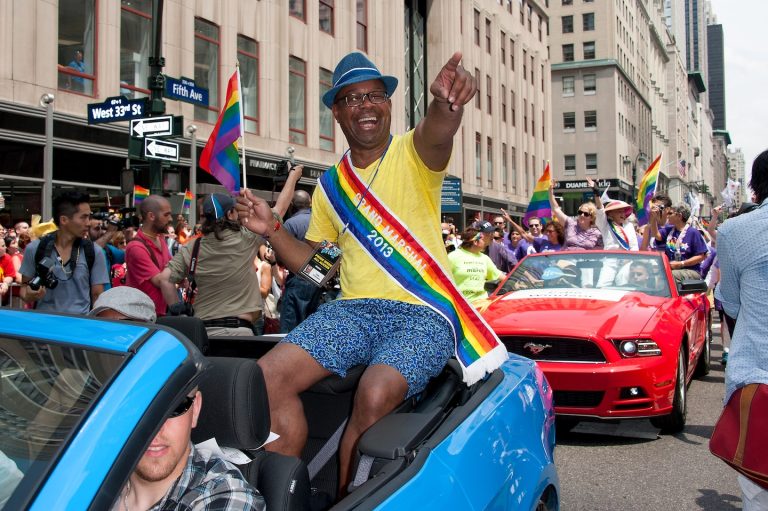
The Center for Black Equity
Earl Fowlkes, who leads the Center for Black Equity, denounced e-cigarettes a year before he championed them as a healthier alternative to traditional cigarettes.
My reporting showed he developed a relationship with the Vapor Technology Association, an industry group, which made his report a fixture in its campaign to pressure the Food and Drug Administration to loosen restrictions.
Fowlkes said neither he nor his group has directly received vaping industry money and that he softened his stance on vaping because he sees it as a way to help people stop smoking cigarettes.
Fowlkes initially told The Post that a consultant for the Vapor Technology Association had also helped him raise roughly $30,000 to commission a report on the “major benefits and moderate risks” of vaping. Hours after The Post contacted that consultant for comment, Fowlkes said he was “mistaken” about the consultant’s involvement in raising financing for the report. Fowlkes did not respond to further questions about the inconsistencies of his accounts.
Menthol cigarettes
Reynolds American, which makes Newport, the nation’s top-selling menthol brand, donated to the National Action Network, the activist group led by the Rev. Al Sharpton, and to scholarships run by civil rights lawyer Ben Crump, and has contributed hundreds of thousands of dollars to organizations representing Black law enforcement officials and Black newspapers, according to the recipients.
Representatives of those groups went on to meet with Biden administration officials to oppose a proposal to ban menthol flavors, used by 81 percent of Black smokers. The Biden administration has repeatedly delayed plans to implement the ban.
Black opponents of the menthol ban have said the donations did not influence their positions. Luis Pinto, a Reynolds spokesman, said the donations are not “conditional upon organizations maintaining a particular position.”
Juul
A trove of recently released internal Juul company emails and documents show how the e-cigarette maker saw political and financial advantages in cultivating relationships with Black institutions and civil rights groups.
“Without a politically broad array of voices validating the company’s brand, creating a positive echo chamber, with regulators and policymakers, the company could be irreparably harmed,” a Juul executive wrote in a 2019 memo.
Juul executives authorized an initial $500,000 payment to the National Action Network for a tobacco cessation campaign and attempted to woo the NAACP. Both Black organizations eventually rebuffed Juul, concluding that e-cigarettes are not as helpful for public health as the company contends.
Stefanie Miller, Juul’s vice president for external affairs, said the company cultivated relationships with groups serving marginalized communities to end higher rates of smoking traditional cigarettes.
On the Hill
Senate Republicans push for embryo safety audit
Five Senate Republicans are calling on a government watchdog to audit safety standards at fertility clinics that provide in vitro fertilization and other forms of assisted reproductive technology.
While federal law requires clinics to send their success rates and certification status to the Centers for Disease Control and Prevention annually, the agency’s most recent report lacks information about their handling of embryos, according to a letter sent yesterday to HHS Inspector General Christi Grimm.
“As Congress considers legislation related to IVF, we respectfully request that HHS OIG provide an evaluation and assessment of how well ART clinic oversight is working to better enable Congress to evaluate what changes may need to be made,” wrote Sen. Bill Cassidy, the top Republican on the Senate’s health committee, along with Sens. James Lankford (R-Okla.), Roger Marshall (R-Kansas), Tommy Tuberville (R-Ala.) and Markwayne Mullin (R-Okla.).
- A spokesperson for the office confirmed that it received the senator’s letter and said it is being reviewed for appropriate action.
The bigger picture: IVF has been in the hot seat in Congress after an Alabama court ruling threw the procedure into legal uncertainty earlier this year. While Republicans have publicly backed the popular fertility treatment, they blocked a Democratic-led effort to enshrine protections for IVF in federal law last week. GOP lawmakers have sought unsuccessfully to pass an alternative bill.
In other news from Capitol Hill …
The public option returns: Democratic Sens. Michael Bennet (Colo.) and Tim Kaine (Va.) reintroduced their “Medicare X” proposal yesterday.
The legislation would create a government-run health insurance plan, based on Medicare, that would be available to individuals and small businesses through the Affordable Care Act marketplaces, alongside plans offered by private insurers. The model aims to increase coverage rates and boost competition in the exchanges with the hope of driving down costs.
In the courts
High-stakes rulings loom as SCOTUS nears the end of its term
On our radar: The Supreme Court is expected to drop a batch of opinions at 10 a.m., with some major decisions still hanging in the balance, our colleagues Ann E. Marimow, Nick Mourtoupalas and Tobi Raji report.
We’ve got our eyes on five cases with major implications for public health. Here’s a snapshot of what’s at stake:
Emergency room abortions: The precedence of a federal emergency care law over state abortion bans.
Federal agency power: Whether courts must continue deferring to agency officials’ reasonable interpretations of ambiguous federal statutes over private entities in litigation.
Combating misinformation online: The White House’s ability to pressure social media companies to remove posts it deems problematic, including those related to public health.
Opioid lawsuit settlement: The legality of a proposed Purdue Pharma bankruptcy plan that would allocate billions to address the opioid crisis but shields the family that owns the company from future lawsuits.
Homeless encampments: The authority of state and local officials to punish homeless individuals for camping in public spaces when no shelter beds are available.
Industry Rx
Despite fentanyl crackdown, Chinese sellers are open for business
Chinese companies fueling the production of fentanyl appear to be back in action seven months after President Biden and Chinese President Xi Jinping pledged to revive a joint crackdown on illegal drug trafficking, The Post’s Cate Cadell and Lily Kuo report.
The details: Drug suppliers initially paused international orders after the deal was announced in November, as Beijing ramped up inspections, circulated new regulations and dispatched warning letters.
Fast forward to today, sellers say it’s business as usual. The online marketplace is bustling, with small but potent packages of the chemicals used in the production of fentanyl flowing from China to Mexico, according to three people involved in the export of illicit precursors and seller advertisements across a dozen online platforms.
- The suppliers described resuming sales this year after making minor adjustments to avoid scrutiny, including relabeling packages for customs and switching to alternative compounds with similar uses.
Why it matters: China is the world’s top producer of chemicals used to synthesize fentanyl. The majority of the U.S. supply comes from illicit labs run by criminal groups in third-party countries, mainly Mexico, where cartels procure Chinese chemicals and equipment.
In other health news
- Change Healthcare started the process of notifying a “substantial portion” of Americans that their private information was compromised in the cyberattack that brought the nation’s health-care system to its knees earlier this year, Stat’s Brittany Trang reports.
- A federal judge in Texas ruled that HHS overstepped its authority by issuing guidance that bars hospitals and other medical providers from using online tracking technologies that monitor users of their websites, Nate Raymond reports for Reuters.
- The FDA is seeking public comment on a new proposal that would remove switching studies as a requirement for biosimilar drug sponsors seeking the agency’s interchangeable designation.
- In its first year, a CDC-funded program distributed roughly 440,000 HIV self-tests to U.S. residents, reaching 24.1 percent of people who had never been tested before. The agency reported that 1.9 percent of recipients tested positive.
Quote of the week
“The folks who offer the money want to prostitute us against what’s in the best interests of our own people without any regard for how that impinges on our own integrity.”
— Rev. Horace Sheffield, on tobacco companies offering financial rewards to Black leaders and activists to oppose a ban on menthol cigarettes.
Health reads
Sugar rush
Thanks for reading! Not a subscriber? Sign up here.


0 Comments