
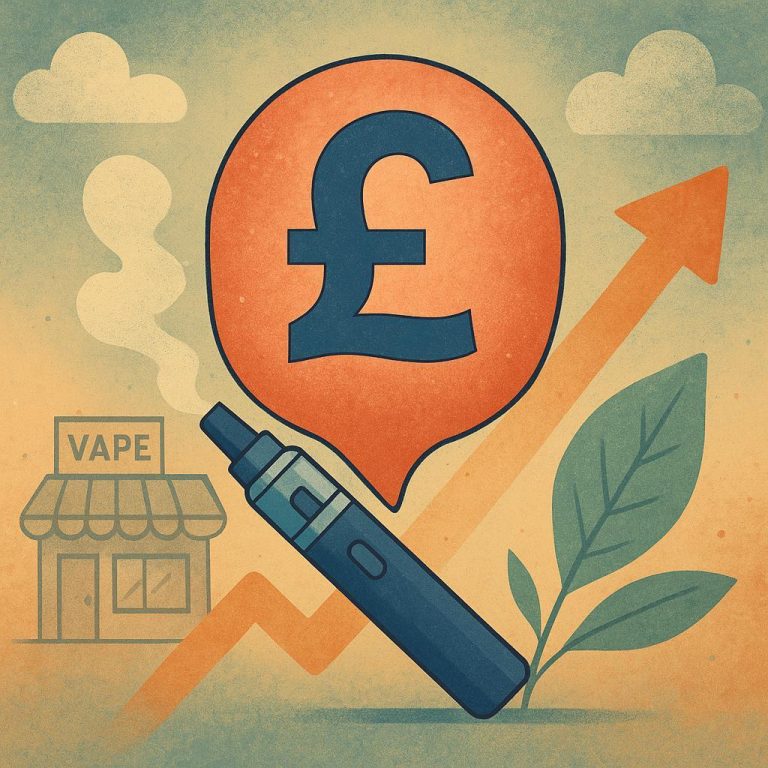

UK Targets Vape Shops with higher Business Rates, UKVIA Says
The UK vaping industry is facing fresh financial pressure as vape shops are reportedly being targeted with higher business rates, according to the UK Vaping Industry Association (UKVIA). For many independent retailers, this shift could mean increased operating costs at a time when the sector is already grappling with new regulations, stricter enforcementand ongoing public debates around youth vaping.
In this article, we break down what these higher business rates for vape shops could mean, why UKVIA is raising the alarmand how vape retailers can respond strategically to protect their margins and support adult smokers looking to switch from cigarettes.
Understanding the Issue: Why Are Vape Shops Facing Higher Business Rates?
Business rates are a tax on non-domestic properties in the UK. Local authorities use a property’s “rateable value” (based on rental value) to calculate how much a business must pay each year.
According to UKVIA, some vape shops are reporting that they are:
- Being reclassified in a way that places them in a higher business rates band
- facing assessments closer to those applied to off-licences or specialist tobacco retailers
- Subject to steep rate rises after local revaluations
In practice, this means vape stores may be treated more like high‑risk or “vice” retailers from a taxation standpoint, despite positioning themselves as providers of harm reduction products for adult smokers.
What UKVIA Says About Higher Business Rates for Vape Shops
The UK Vaping Industry Association has warned that rising costs, including higher business rates, could:
- Undermine public health goals by making it harder for legitimate vape shops to operate
- Push smokers back to cigarettes if access to regulated and affordable vape products shrinks
- Strengthen the illicit market, as unregulated sellers fill the gap left by struggling high‑street retailers
UKVIA argues that vape shops should be recognised as part of the smoking cessation ecosystem, not penalised as if they were conventional tobacco outlets. With the UK government committed to becoming a “smoke-free” nation, the association believes tax and regulatory frameworks should support, not discourage, vaping as a less harmful choice for adult smokers.
How Higher Business Rates Impact Vape Retailers
For a typical independent vape shop, business rates are often one of the largest fixed costs, alongside rent and staffing.Sudden increases can have several knock-on effects:
| Cash Flow | Less working capital for stock, marketingor hiring. |
| Pricing | Pressure to raise retail prices of e-liquids and devices. |
| Expansion | Delays or cancellation of new store openings. |
| Survival | Risk of closure, especially in marginal locations. |
these cost pressures are particularly challenging for small, specialist vape shops that:
- Rely heavily on footfall and local communities
- Offer face‑to‑face advice to adult smokers looking to switch
- operate in high-street or shopping centre locations with already rising rents
Public Health Angle: do Higher Vape Shop Taxes Make Sense?
One of the key arguments raised by UKVIA and many public health advocates is that vaping and smoking should not be treated the same in policy or taxation. Numerous UK health bodies, including Public Health england historically, have recognised that:
- Vaping is substantially less harmful than smoking for adult users
- Vape products can play a role in helping smokers quit or reduce cigarette use
If legitimate vape stores are forced to close due to higher business rates and rising costs, the likely outcomes include:
- Less access to expert advice for adult smokers seeking to transition
- Shift to online-only or informal sellers, which may be less regulated
- Increased risk of illicit and non-compliant products entering the market
From a harm reduction perspective, many in the industry argue that policy should differentiate clearly between combustible tobacco and vaping, both in how regulations are framed and how taxes like business rates are applied.
What Vape Shop Owners can Do: Practical Steps
While national policy is decided at government level,vape retailers are not powerless.Here are some practical steps to manage the impact of higher business rates on vape shops and to engage constructively with authorities.
1. Check and Challenge Your rateable Value
- review your rateable value on the Valuation Office Agency (VOA) website.
- If you believe your shop has been incorrectly classified or over-valued, you might potentially be able to challenge the assessment.
- Gather evidence such as rental agreements, comparison with similar local propertiesand business type specifics.
2. explore Available Reliefs and Support
Vape shops, particularly smaller independents, may qualify for:
- Small Business Rate relief (SBRR)
- Retail, hospitality and leisure relief if available in your area
- Local authority hardship or discretionary relief schemes
Contact your local council’s business rates team and ask specifically about reliefs for retail businesses.
3. Strengthen Your Business Model
Higher rates make it crucial to run a lean, resilient operation. Consider:
- Diversifying your product range (e.g. shortfills, nicotine salts, CBD where legal)
- Building a loyalty scheme to retain regular customers
- Expanding your online presence with click‑and‑collect or local delivery
- Providing stop‑smoking support and clear harm-reduction facts to differentiate your store
4. Engage with Industry Bodies Like UKVIA
UKVIA and other trade groups can amplify the concerns of individual retailers. By joining and participating, vape shops can:
- Stay updated on policy developments
- Contribute real‑world data and case studies on the impact of higher business rates
- support coordinated lobbying efforts for fairer treatment of vape stores
Case Study: How a Local Vape Shop Navigated a Rate Rise
Imagine a small high‑street vape shop in a regional UK town receiving notice that its business rates will increase by 25% following a local revaluation. Already contending with higher energy costs and stricter compliance requirements, the owner fears the additional bill will erase their remaining profit.
By taking a proactive approach, the owner:
- Reviewed the valuation and discovered the premises had been classified similarly to an off‑licence, despite not selling tobacco or alcohol.
- Submitted a challenge with comparative evidence from other retail units and support from a local business adviser.
- applied for Small Business Rate Relief, which partially offset the increase.
- Refined the product mix to focus on higher‑margin e‑liquids and starter kits for adult smokers.
- Partnered with a local stop‑smoking service to run information days, boosting footfall and community reputation.
while the rate rise still had an impact, these steps helped stabilise the business, preserve jobsand continue offering a regulated alternative to smoking locally.
Looking Ahead: Policy, Fairness and the Future of Vape Retail in the UK
As the government pursues enterprising smoke-free targets, the way it treats vaping in taxation, regulationand public messaging will be critical.Many in the sector, led by organisations like UKVIA, are calling for:
- Clear differentiation between vaping and smoking in business rates policy
- Recognition of vape shops as part of harm reduction strategies
- Stable, evidence‑based regulation that supports adult smokers to switch while tackling youth access
If vape shops are continually targeted with higher business rates and treated as if they were conventional tobacco retailers, the consequences may run counter to the UK’s public health ambitions. Balanced policy will require ongoing dialog between government, health expertsand responsible industry voices.
Conclusion
The claim that the UK is targeting vape shops with higher business rates,as highlighted by UKVIA,should concern not only retailers but also policymakers and public health advocates. Vape stores play a vital role in offering adult smokers a regulated, less harmful alternative to cigarettes. Piling on additional financial burdens risks undermining that role.
For vape shop owners, now is the time to:
- Review and, where necessary, challenge business rate assessments
- Take advantage of available reliefs and business support
- Strengthen operations and engage with industry associations
Ultimately, a fair and evidence‑based approach to vaping business rates in the UK will help ensure that legitimate retailers can survive, innovateand continue supporting adult smokers who want to move away from combustible tobacco.


0 Comments