
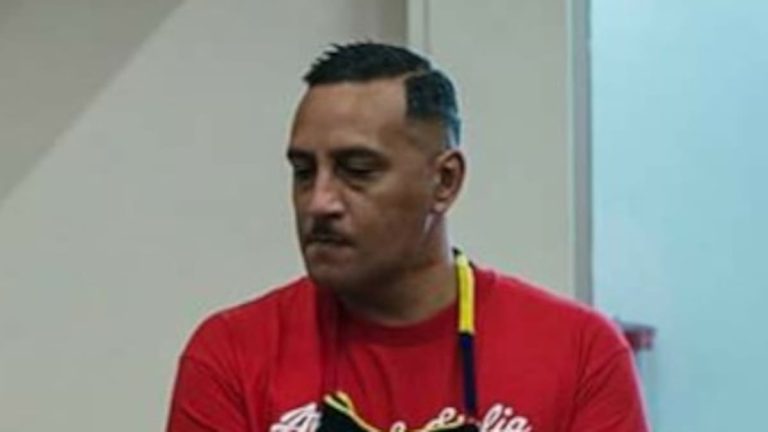

Art, Struggles, and Consequences: The Story of Pascal Atiga-Bridger and His Family
Pascal Atiga-Bridger, a well-known graffiti artist in Auckland, has made headlines recently, not just for his artistic talents but also due to a controversial incident involving his family. This article delves into the events surrounding Atiga-Bridger, his daughter, and the legal challenges they faced, alongside the artist’s journey from illicit tagging to community-focused art.
The Incident at the Prison
In a surprising turn of events, Pascal Atiga-Bridger and his daughter were caught on CCTV during a visit to a prison where they were meeting with Atiga-Bridger’s son, an inmate. Authorities allege that during this visit, a series of attempted exchanges took place, leading to legal consequences for the family.
As they were wrapping up their visit, Atiga-Bridger was seen passing his son a baby and a small package. Moments later, the son concealed a second small package down his shirt, followed by another package that was also exchanged. Upon leaving, the inmate was searched by prison guards, who discovered 66 grams of tobacco and 10.5 grams of cannabis resin inside 13 capsules. Additionally, two small packages of tobacco were found discarded in the visiting room.
Legal Repercussions
In November, Pascal Atiga-Bridger was sentenced to 40 hours of community service for his involvement. This incident has brought attention not only to the family’s actions but also to the greater implications of such decisions and their impact on personal lives.
The Art Journey of Pascal Atiga-Bridger
Despite the recent challenges, Atiga-Bridger has a remarkable backstory. He initially gained notoriety through illegal graffiti tagging before redirecting his life’s path back to formal education in the arts at the age of 39. His evolution as an artist included transitioning from tagging to painting commissioned street murals, which allowed him to earn a sustainable income through Auckland’s Beautification Trust.
Reflecting on his earlier experiences, Atiga-Bridger noted, “Tagging was just a thing I did at school, it was a trend, and I got an adrenaline buzz out of it.” Today, he finds irony in being compensated for what he once performed clandestinely. His reformation has not only changed his path but also allowed him to inspire others.
Community Engagement and Art Education
Beyond his personal transformation, Atiga-Bridger has actively engaged in community art projects. In 2017, he collaborated with students at Red Hill School, aiming to create artwork that contributed positively to the community. Such initiatives underscore his commitment to fostering artistic expression among youth, encouraging them to consider a career in art much earlier than he did.
The Daughter’s Request and Its Outcome
This week, the courtroom saw Pascal Atiga-Bridger’s 27-year-old daughter seeking a discharge without conviction. Her defense attorney emphasized that she had already qualified as a real estate agent but faced potential obstacles in obtaining her license due to this conviction hanging over her. The legal proceedings highlighted her determination to improve her life’s circumstances and that she had successfully completed all requirements set for her career advancement.
Crown prosecutor Nina Wilgur argued against the discharge, deeming it too uncertain. Judge Yelana Yelavich ultimately decided to uphold the conviction, stating that it does not inherently disqualify her from obtaining a license. Each case is evaluated on its individual merits and circumstances, and she reassured the young woman about her prospects for rehabilitation.
Leaving the courtroom, the defendant expressed her frustration, insisting that the verdict went against her aspirations, proclaiming, “You’re hindering my chance at success!”
Conclusion
The journey of Pascal Atiga-Bridger and his family reflects a complex interplay of personal choices, artistry, and the legal system. While the incident may have cast a shadow on their lives, Atiga-Bridger’s commitment to community art and mentorship remains commendable. It serves as a poignant reminder of the potential for redemption and the importance of community engagement in overcoming adversity.

0 Comments