
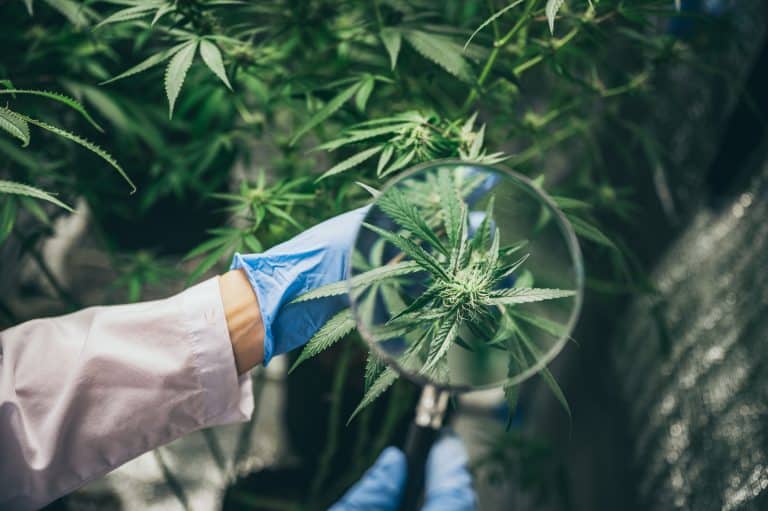

In the quest to fend off the harmful effects of ultraviolet-A (UVA) rays, science has stumbled upon a rather surprising ally: cannabidiol (CBD). UVA radiation not only speeds up the aging process of the skin but also increases the risk of skin cancers. Now, a ground-breaking human trial suggests that CBD could be a powerful guard against these damaging rays, marking a potential revolution in how we protect our skin from the sun.
Recent findings indicate that CBD, renowned for its anti-inflammatory and antioxidant properties, can reduce the formation of UVA-induced DNA mutations that lead to skin aging. This insight opens the door for integrating CBD into sun care regimens, potentially offering more robust and long-lasting protection than currently available products.
Image Credit: © chokniti – stock.adobe.com
Unpacking the Study’s Impact on Sun Care
This study is the first of its kind to delve into the UV-protective capabilities of CBD in humans, adding a valuable layer of evidence to the broader conversation on CBD’s dermatological benefits. With consumers increasingly seeking natural and effective sun-care alternatives, CBD’s potential role in this domain is not just exciting—it’s timely.
Methodology: A Closer Look at the Research
The research involved a double-blind pilot clinical trial that enlisted 19 participants between the ages of 23 and 64. Participants used randomized, masked containers of either nCBD or vehicle cream (VC), and used these creams twice daily over a 14-day period. Each participant’s skin was then exposed to UVA radiation and subsequent biopsies were taken to measure the effects.
The Findings: CBD’s Protective Performance
The trial’s outcomes were enlightening. Subjects using the nCBD cream exhibited reduced erythema—that’s the reddening of the skin caused by sun damage—compared to those using the VC. Additionally, nCBD-treated skin showed less epidermal thickening, a symptom of sun damage. Crucially, UVA-induced DNA and mitochondrial DNA damage was significantly lower in the nCBD sample group. These findings suggest that CBD might not only soothe inflamed skin but could actively counteract the cellular damage associated with UVA exposure.
Understanding the Significance
This investigation lays the groundwork for future research into how CBD could become a part of everyday sun protection, especially given concerns around the limited UVA filtering capabilities of current sunscreens. It could also pave the way for innovative sun care products that cater to a more diverse audience, including those with darker skin tones who are often underrepresented in skin protection studies.
In amidst the medical and technical achievements, the study also prompts a shift in perspective on the cannabinoid industry. Finding a balance between potent formulations and robust scientific evidence is key to advancing this sector, and these findings represent a significant step in that direction.
Conclusion: The Rise of CBD in Dermatology
As the scientific community continues to unravel the many mysteries of CBD, its emergence as a skin care hero seems almost inevitable. With the need for better, more diverse, and more natural sun protection solutions at an all-time high, CBD’s potential inclusion in this area is promising. The research has begun to create a robust framework for future studies—studies that may well confirm CBD’s place as a staple in sun care regimes of the future.
Dr. Adam Friedman, co-senior author of the study and chair of Dermatology at The George Washington University, encapsulates the enthusiasm surrounding these findings, seeing it as the ignition of long-awaited clinical validation and translation of CBD’s dermatological benefits.
References:
- Guan LL, Lim HW, Mohammad TF. Sunscreens and photoaging: A review of current literature. Am J Clin Dermatol. 2021;22(6):819-828. doi:10.1007/s40257-021-00632-5
- McCormick E, Han H, Abdel Azim S, et al. Topical nanoencapsulated cannabidiol cream as an innovative strategy combatting ultraviolet a-induced nuclear and mitochondrial DNA injury: A pilot randomized clinical study. JAAD Int. 2024;22(24):02490-3.doi:10.1016/j.jaad.2024.06.088
Frequently Asked Questions (FAQs)
- What is CBD?
- Cannabidiol (CBD) is a non-psychoactive compound found in the cannabis plant, known for its potential therapeutic effects, including anti-inflammatory and antioxidant properties.
- How can CBD protect the skin from UVA?
- According to recent research, CBD may protect the skin from UVA rays by reducing the formation of UVA-induced DNA mutations that contribute to skin aging and potential skin cancers.
- Is CBD-infused sunscreen currently available?
- While some sunscreens containing CBD are available on the market, the specific nanoencapsulated CBD cream studied here represents a more targeted and potentially more effective approach to UVA protection.
- Can CBD replace traditional sunscreens?
- CBD should not be seen as a replacement for traditional sunscreens, but rather as a potential complement or enhancement to existing sun protection regimens, subject to further research and regulatory approval.
- Are there any side effects to using CBD topically?
- Topical CBD is generally well-tolerated, but as with any skincare product, it’s recommended to do a patch test first and consult a healthcare provider if you have sensitive skin or allergies.


0 Comments